
Overview
Diagnosis
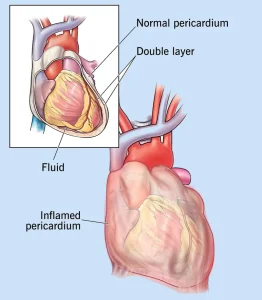
To diagnose pericarditis, a healthcare professional reviews your medical history, asks about symptoms, and examines you. Listening to the heart with a stethoscope can reveal a pericardial rub, a characteristic sound caused when the two layers of the pericardium rub against each other.
Tests used to confirm pericarditis or rule out similar conditions may include:
• Blood tests. Check for signs of heart attack, inflammation, or infection.
• Electrocardiogram (ECG). Records the heart’s electrical signals using electrodes placed on the chest and sometimes arms or legs. Certain patterns can indicate pericarditis.
• Chest X-ray. Shows the size and shape of the heart and can detect enlargement.
• Echocardiogram. Uses sound waves to create images of the moving heart, showing pumping function and any fluid around the heart.
• Cardiac CT scan. X-rays create detailed images to assess heart thickening, which may indicate constrictive pericarditis.
• Cardiac MRI. Uses magnetic fields and radio waves to provide detailed images, showing thickening, inflammation, or other changes in the pericardium.
Treatment
Treatment for pericarditis depends on the underlying cause and severity of symptoms. Mild cases may improve without treatment, while others require medications or procedures.
Medicines commonly used include:
• Pain relievers, such as aspirin or ibuprofen, to manage discomfort. Prescription-strength pain relievers may be used in more severe cases.
• Colchicine. Reduces inflammation and may prevent recurrence. Not suitable for people with liver or kidney disease.
• Corticosteroids. Strong anti-inflammatory medicines, such as prednisone, used if symptoms do not improve with other treatments or if the condition recurs.
• Immunosuppressants. Lower immune system activity to reduce inflammation caused by conditions like rheumatoid arthritis.
• Immunomodulators. Modify immune system activity to control inflammation. Interleukin 1 blockers are one example used in pericarditis.
If bacterial infection causes pericarditis, antibiotics may be prescribed. Extra fluid around the heart may need to be drained.
Procedures or surgeries include:
• Pericardiocentesis. A needle or small catheter is used to remove excess fluid from the pericardium.
• Pericardiectomy. Partial or complete removal of the pericardium may be needed if the sac remains rigid due to constrictive pericarditis.
Advertisement
