
Overview
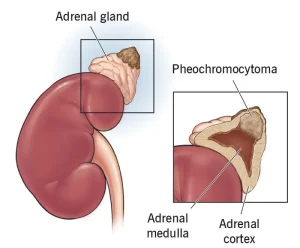
Diagnosis
To determine if you have a pheochromocytoma, your healthcare professional will likely order several tests.
Lab tests
These tests measure levels of adrenaline, noradrenaline, and their byproducts called metanephrines. Elevated metanephrine levels are more common in people with pheochromocytoma.
• 24-hour urine test: You collect all urine for 24 hours. Written directions will guide how to store, label, and return samples.
• Blood test: A sample of blood is taken and analyzed in a lab.
Preparation for these tests may include fasting or temporarily stopping certain medications. Always follow your healthcare professional’s instructions.
Imaging tests
If lab tests indicate a pheochromocytoma, imaging is used to locate the tumor:
• CT scan: Combines X-ray images from multiple angles to create detailed images.
• MRI: Uses radio waves and a magnetic field to produce detailed images.
• M-iodobenzylguanidine (MIBG) imaging: Detects small amounts of injected radioactive compounds absorbed by pheochromocytomas.
• Positron emission tomography (PET): Detects radioactive compounds taken up by a tumor.
Sometimes, an adrenal tumor is found incidentally during imaging for other reasons. Additional tests are then ordered to determine whether treatment is needed.
Genetic testing
Genetic tests may be recommended to see if a pheochromocytoma is linked to an inherited condition. Understanding genetic factors is important because:
• Some conditions can cause multiple medical problems, suggesting the need for screening other conditions.
• Genetic results may affect treatment decisions and long-term health monitoring.
• Family members may need screening for pheochromocytoma or related conditions.
Genetic counseling can help interpret results and support family mental health during the testing process.
Treatment
Surgery to remove the tumor is the primary treatment for pheochromocytoma.
Preparing before surgery
Before surgery, medications are prescribed for 7 to 14 days to control blood pressure and block high-adrenaline hormones. You may also be advised to follow a high-sodium diet.
Medicines used include:
• Alpha blockers, beta blockers, and calcium channel blockers to relax blood vessels and improve blood flow.
• These medications may slow the heart and lower blood pressure, and the high-sodium diet helps prevent dangerous drops in blood pressure during and after surgery.
Surgery
Most surgeries are laparoscopic, using small incisions, video cameras, and surgical tools. Robotic-assisted surgery may also be used.
• Surgeons often remove the entire adrenal gland containing the tumor, but sometimes only the tumor is removed to preserve healthy gland tissue.
• If the pheochromocytoma is metastatic, surgery may remove as much tumor as possible, combined with medical therapy to manage symptoms and blood pressure.
After surgery
If one adrenal gland remains healthy, it can perform normal functions, and blood pressure typically returns to a healthy range. Lifelong follow-ups and blood tests are needed to monitor health and detect tumor recurrence.
If both adrenal glands are removed, lifelong steroid replacement therapy is required.
Cancer treatments
Metastatic pheochromocytomas are rare. Treatments may include:
• Targeted therapies combining medicine with radioactive substances to kill cancer cells.
• Chemotherapy to target fast-growing cancer cells and relieve symptoms.
• Radiation therapy to treat tumors, especially if they have spread to bones.
• Ablation using freezing temperatures, high-energy radio waves, or ethanol alcohol to destroy tumors.
Consistent follow-up and treatment help manage pheochromocytoma, control symptoms, and prevent complications.
Advertisement
