
Overview
Diagnosis
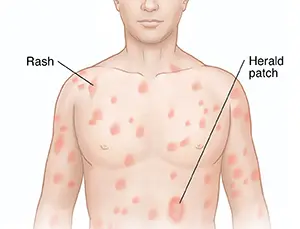
In most cases, a healthcare provider can identify pityriasis rosea by examining the rash. Sometimes, additional tests such as a skin scraping or a skin biopsy may be needed. A skin biopsy involves taking a small sample of the affected skin to help distinguish pityriasis rosea from other similar rashes.
Treatment
Pityriasis rosea usually resolves on its own within 4 to 10 weeks without treatment. The condition clears without scarring and rarely returns.
If the rash persists or itching is bothersome, your healthcare provider may recommend treatments such as:
• Medications – Corticosteroids or antihistamines can help relieve itching or discomfort if home remedies are insufficient.
• Light therapy – Exposure to natural or artificial light may ease symptoms. This treatment can sometimes cause lasting areas of darker skin (post-inflammatory hyperpigmentation), even after the rash resolves.
Advertisement
