
Overview
Diagnosis
Polio, also known as poliomyelitis, is usually suspected based on symptoms and exposure history. A healthcare provider will consider whether the patient has been in an area where polio is still present or has not been vaccinated.
Diagnostic steps may include:
• Physical examination to check for muscle weakness, paralysis, or decreased reflexes
• Reviewing recent medical history and possible exposure to the poliovirus
• Laboratory tests to confirm the infection, which may include:
-
Stool sample analysis to detect poliovirus
-
Throat swab to identify viral presence
-
Blood tests to detect antibodies against poliovirus
Early diagnosis is critical, especially to prevent the spread of the virus to others.
Treatment
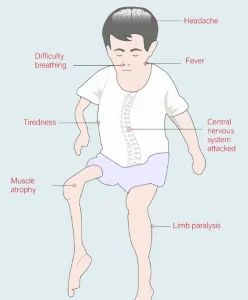
There is no cure for polio; treatment focuses on supportive care and managing symptoms. Most people recover fully, though some may experience long-term muscle weakness or paralysis.
Supportive care may include:
• Bed rest to allow the body to recover
• Pain relief through over-the-counter medications like acetaminophen or ibuprofen
• Physical therapy to prevent muscle atrophy and maintain mobility
• Mechanical ventilation in severe cases where breathing muscles are affected
Prevention is key
Vaccination is the most effective way to prevent polio. Polio vaccines include:
• Inactivated polio vaccine (IPV) given as an injection
• Oral polio vaccine (OPV) used in certain countries for mass immunization campaigns
Maintaining vaccination coverage is essential to eliminate polio and prevent outbreaks.
Advertisement
