
Overview
Diagnosis
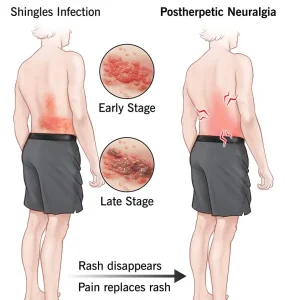
Your health care provider begins by examining your skin. They may gently touch different areas to identify the borders of the affected region. In most cases, this physical exam is enough to confirm postherpetic neuralgia, and no additional tests are required.
Treatment
Managing postherpetic neuralgia often requires a combination of therapies. No single treatment works for everyone, so finding the right approach may take time.
Lidocaine skin patches
Lidocaine patches are small adhesive bandages that contain a numbing medicine. They provide short-term relief when placed directly on painful skin. These patches can be cut to fit only the affected area. Your health care provider may prescribe them, but lower-dose versions are available without a prescription. Keep them stored safely away from children.
Capsaicin skin patch
Capsaicin is derived from hot chili peppers. A high-dose capsaicin patch, known as Qutenza, is available only through a health care provider. A trained professional applies the patch after numbing the skin.
The procedure takes at least two hours, allowing time for monitoring any side effects. Pain relief can last up to three months, and the patch can be reapplied every three months if effective.
Anticonvulsants
Certain seizure medicines can help calm injured nerves and reduce pain. Common options include:
-
Gabapentin (Neurontin, Gralise, others)
-
Pregabalin (Lyrica)
Possible side effects include:
-
Sleepiness
-
Difficulty thinking clearly
-
Unsteadiness
-
Swelling in the feet
Antidepressants
Some antidepressants help regulate brain chemicals involved in both mood and pain perception. They can be effective even if you do not have depression. Commonly used medicines include:
-
Nortriptyline (Pamelor)
-
Amitriptyline
-
Duloxetine (Cymbalta)
-
Venlafaxine (Effexor XR)
These are usually prescribed in lower doses than those used for depression. Potential side effects include:
-
Sleepiness
-
Dry mouth
-
Feeling faint
-
Weight gain
Opioid painkillers
Opioids are strong pain-relieving medicines such as tramadol (Conzip, Qdolo, others), oxycodone (Percocet, Oxycet, others), and morphine.
They may be considered when other treatments fail, but they carry risks, including:
-
Mild dizziness
-
Sleepiness
-
Confusion
-
Constipation
Because opioids can lead to addiction and serious complications, they are rarely recommended for postherpetic neuralgia. If prescribed, your provider should:
-
Explain benefits and risks
-
Set goals for pain relief
-
Create a plan for safely stopping the medicine if needed
-
Start with the lowest effective dose and schedule regular follow-ups
Driving while taking opioids can be dangerous. Avoid alcohol or combining opioids with other medicines.
Steroid shots
In some cases, steroid injections into the spine may help ease pain caused by postherpetic neuralgia
Advertisement
