
Overview
Diagnosis
If you have already been discharged from the hospital after childbirth and your health care provider suspects postpartum preeclampsia, you may need to be readmitted for further evaluation.
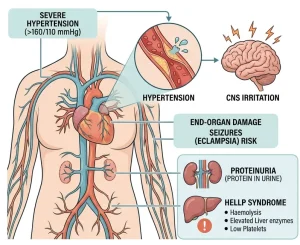
Postpartum preeclampsia is typically diagnosed through lab tests:
-
Blood tests to check how well your liver and kidneys are functioning and to ensure your blood has a normal platelet count, which is important for clotting.
-
Urinalysis to check for protein in the urine. Sometimes a 24-hour urine collection is done to measure the total amount of protein.
Treatment
Postpartum preeclampsia is usually treated with medication to manage symptoms and prevent complications:
-
Medication to lower high blood pressure. If your blood pressure is dangerously high, your provider may prescribe antihypertensive medication.
-
Medication to prevent seizures. Magnesium sulfate is often used for women with severe symptoms to prevent seizures. Treatment usually lasts about 24 hours, and your blood pressure, urination, and other symptoms will be closely monitored.
Breastfeeding is generally considered safe while taking these medications. Consult your health care provider if you have any questions or concerns about medication use while breastfeeding.
Request an appointment
Advertisement
