
Overview
Diagnosis
To diagnose primary progressive aphasia, a neurologist or speech-language pathologist will review your symptoms and may order tests. A hallmark of primary progressive aphasia is worsening communication difficulties over 2 to 3 years without significant changes in thinking or behavior.
Tests and procedures may include:
-
Neurological exam. This includes a speech-language evaluation and a neuropsychological assessment to measure speech, language comprehension, recognition and naming of objects, recall, and other cognitive skills.
-
Blood and body fluid tests. Blood tests or a lumbar puncture (spinal tap) may be done to check for infections or other medical conditions. Genetic tests can detect gene changes linked to primary progressive aphasia or other neurological disorders.
-
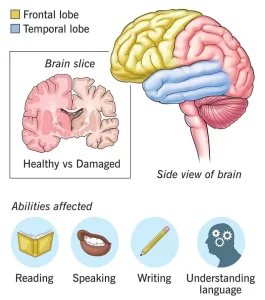
Brain scans. MRI can detect shrinkage in areas of the brain related to language, as well as strokes, tumors, or other brain conditions. FDG PET scans may show changes in how the brain uses glucose, and other PET scans may identify proteins linked to Alzheimer’s disease.
Treatment
There is no cure for primary progressive aphasia, and no medications can stop its progression. Treatment focuses on therapies that help maintain communication abilities and manage symptoms.
Speech and language therapy
Working with a speech-language pathologist can help you compensate for lost language skills. Therapy may slow the progression of some symptoms and improve your ability to communicate. Caregivers are often encouraged to attend sessions to learn strategies to support communication at home.
Physical and occupational therapy
If symptoms affect movement or balance, physical and occupational therapy can help manage these challenges and improve daily functioning.
Advertisement
