
Overview
Diagnosis
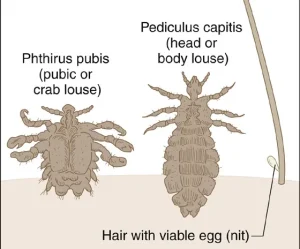
A pubic lice infestation is typically confirmed through a visual examination of the pubic area. Seeing live, moving lice is the clearest sign of an active infestation. Lice eggs, called nits, may also be present on the hair shafts. Nits can stay attached to the hair even after treatment, so their presence does not always mean the infestation is still active. Your healthcare professional may use a magnifying tool or fine combing to help identify lice or nits if needed.
Treatment
Most cases of pubic lice can be treated with over-the-counter products that contain 1% permethrin or pyrethrin. If these treatments do not successfully eliminate the lice, your healthcare professional may recommend stronger prescription options.
Malathion lotion may be used when initial treatment fails. It is applied to the affected area and washed off after eight to twelve hours. Another option is ivermectin, taken as a single oral dose, with the possibility of repeating the dose after ten days if needed.
When lice affect the eyelashes or eyebrows, treatment is approached more carefully. Petroleum jelly may be applied gently with a cotton swab at night and washed off in the morning. This may need to be repeated for several weeks. Caution is important to avoid irritating the eyes. If the infestation persists, a topical ointment may be prescribed.
If only a small number of lice or nits are found, they may be removed manually with a nit comb or fingernails. Regardless of the treatment used, all hairy areas of the body should be checked because lice can move from treated areas to untreated ones. Shaving does not eliminate pubic lice and isn’t recommended as a treatment method.
Advertisement
