
Overview
Diagnosis
Pulmonary atresia is usually diagnosed soon after birth. Tests are done to check the baby’s heart health and confirm how well the heart and lungs are functioning.
Tests to diagnose pulmonary atresia may include:
-
Pulse oximetry, which uses a small sensor on the fingertip to measure blood oxygen levels. Low oxygen may signal a heart or lung problem.
-
Chest X-ray to see the size and shape of the heart and lungs.
-
Electrocardiogram (ECG or EKG) to record the heart’s electrical activity and show how the heart is beating.
-
Echocardiogram, the main test for pulmonary atresia, which uses sound waves to create moving images of the heart and show how blood flows through the heart and valves. When done before birth, it is called a fetal echocardiogram.
-
Cardiac catheterization, in which a thin tube is guided through a blood vessel to the heart. Dye is injected to clearly show heart arteries on an X-ray and to gather detailed information about heart function. Some treatments may also be performed during this test.
Treatment
Babies with pulmonary atresia require emergency medical care. Treatment depends on the severity of the condition and may include medicines, catheter-based procedures, or surgery.
Medications
Medicine may be given through an IV to keep the ductus arteriosus open. This temporary measure helps maintain blood flow to the lungs while healthcare professionals determine which surgery or procedure is most appropriate.
Surgery or other procedures
Catheter-based procedures may be used to improve blood flow in some babies. A long, thin tube is inserted through a large blood vessel in the groin and guided to the heart. Procedures may include:
-
Balloon atrial septostomy, which uses a balloon to enlarge the foramen ovale, a natural opening between the upper heart chambers that normally closes after birth. Enlarging it allows blood to flow more easily from the right to the left side of the heart.
-
Stent placement in the ductus arteriosus to keep it open and maintain blood flow to the lungs.
Babies with pulmonary atresia often need several heart surgeries as they grow. The type of surgery depends on the size of the right lower heart chamber and the pulmonary artery.
Types of surgery may include:
-
Shunting to create a new pathway for blood to flow from the aorta to the pulmonary arteries. This helps increase blood flow to the lungs, but most babies outgrow the shunt within a few months.
-
Glenn procedure, in which a large vein that returns blood to the heart is connected to the pulmonary artery. Another large vein continues to supply blood to the right side of the heart, which then pumps it through the repaired pulmonary valve. This may help the right ventricle grow.
-
Fontan procedure, used if the right ventricle remains too small. This surgery creates a pathway that allows most or all blood returning to the heart to flow directly into the pulmonary artery.
-
Heart transplant if the heart is too damaged to repair.
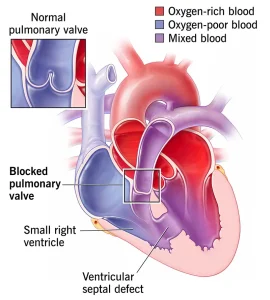
If a ventricular septal defect (VSD) is present, surgery is performed to close the hole. The surgeon then creates a connection from the right pumping chamber to the pulmonary artery, sometimes using an artificial valve.
Advertisement
