
Overview
Diagnosis
A pediatric psychiatrist or psychologist conducts a detailed evaluation to diagnose reactive attachment disorder. This assessment may involve direct observation of how the child interacts with parents or caregivers, along with information about behavior patterns over time. Examples of behavior in different situations, details about the child’s living environment since birth and an evaluation of parenting styles may all be included. The clinician also works to rule out other psychiatric or developmental conditions, such as intellectual disability, adjustment disorders, autism spectrum disorder, depressive disorders or post-traumatic stress disorder.
Diagnosis is typically guided by the criteria in the Diagnostic and Statistical Manual of Mental Disorders (DSM-5). It is not usually made before 9 months of age, and symptoms generally appear before the age of 5. DSM-5 criteria include a consistent pattern of emotionally withdrawn behavior toward caregivers, ongoing social and emotional difficulties, a history of unmet emotional needs or instability in caregiving, and confirmation that the child does not have autism spectrum disorder.
Treatment
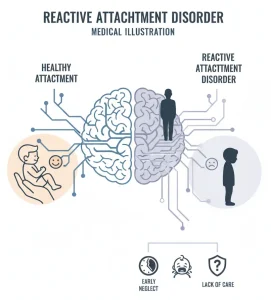
Children with reactive attachment disorder are believed to have the ability to form healthy attachments, but early life experiences may have disrupted this development. Many children show resilience, and early intervention can greatly improve outcomes. Treatment involves both the child and caregivers, with the goals of providing a safe, stable living environment and helping the child build positive, secure relationships.
A mental health professional may offer education and guidance in skills that support healthy attachment. Treatment strategies may include:
-
Encouraging development through nurturing, responsive and caring interactions
-
Ensuring consistent caregivers to promote stability
-
Providing a positive, stimulating and engaging environment
-
Addressing medical, safety and housing needs as necessary
Additional services that may benefit the child and family include psychological counseling, education for caregivers and parenting skills classes. Controversial or coercive methods, such as physically forceful techniques aimed at breaking down supposed resistance to attachment, are not supported by evidence and can be harmful. Before trying any unconventional approach, it is important to consult the child’s mental health provider to ensure the treatment is safe and evidence based.
Advertisement
