
Overview
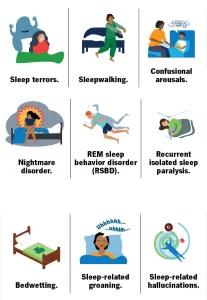
Diagnosis
To diagnose REM sleep behavior disorder, your doctor reviews your medical history and symptoms to understand how they relate to your sleep patterns. Evaluation typically involves a combination of clinical interviews, physical examinations and specialized sleep testing to rule out other conditions and confirm the diagnosis.
A physical and neurological exam is an important first step. Your doctor checks for signs of REM sleep behavior disorder as well as other sleep-related or neurological conditions. Because this disorder can present symptoms similar to obstructive sleep apnea or narcolepsy, a thorough evaluation helps identify any other issues that may coexist.
Your doctor may also speak with your sleeping partner. They may be asked whether they have noticed you acting out your dreams, such as punching, flailing your arms, shouting or screaming. A partner may also complete a questionnaire describing these behaviors, which can provide valuable information about your nighttime activity.
A nocturnal sleep study, or polysomnogram, is often recommended. This overnight test takes place in a sleep lab where sensors track heart, lung and brain activity, breathing patterns, limb movements, vocalizations and blood oxygen levels. Video recording is typically used to capture physical movements during REM sleep cycles.
Diagnostic criteria for REM sleep behavior disorder generally follow the guidelines outlined in the International Classification of Sleep Disorders, Third Edition (ICSD-3). Diagnosis requires repeated episodes in which you talk, make noises or perform complex motor behaviors during sleep that align with dream content. You typically recall dreams linked to the episodes, and if awakened, you remain alert rather than confused. A sleep study must show increased muscle activity during REM sleep, and symptoms must not be explained by another sleep disorder, a mental health condition, medication or substance use.
REM sleep behavior disorder may be an early sign of certain neurodegenerative conditions such as Parkinson’s disease, multiple system atrophy or dementia with Lewy bodies. Ongoing follow-up with your doctor is important to monitor any changes over time.
Treatment
Treatment for REM sleep behavior disorder includes both safety measures and medication options to reduce symptoms and lower the risk of injury.
Physical safeguards are often recommended to create a safer sleep environment. These may include:
-
Padding the floor around the bed
-
Removing dangerous objects such as sharp items and weapons
-
Using bed barriers
-
Keeping furniture and clutter away from the sleeping area
-
Protecting bedroom windows
-
Sleeping in a separate bed or room until symptoms are well controlled
Medications may also help manage symptoms. Melatonin, a commonly used dietary supplement, may reduce or eliminate episodes. It is often well tolerated and may work as effectively as clonazepam for many individuals. Clonazepam, traditionally used to treat anxiety, has long been a standard treatment for REM sleep behavior disorder. It can be effective, though it may cause side effects such as daytime sleepiness, balance issues or worsening of sleep apnea.
Researchers continue to explore additional medications that may be helpful. Your doctor will work with you to determine the most appropriate treatment based on your overall health, symptoms and any other conditions you may have.
Advertisement
