
Overview
Diagnosis
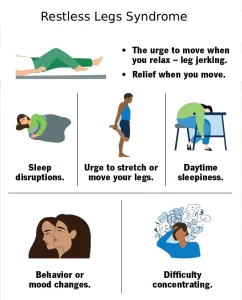
To diagnose restless legs syndrome, a healthcare professional reviews your medical history and asks detailed questions about your symptoms. Diagnosis is based on criteria from the International Restless Legs Syndrome Study Group. These include a strong urge to move the legs, discomfort that begins or worsens during rest, relief with activity, symptoms that are more noticeable at night and symptoms that cannot be explained by another medical or behavioral condition. A physical and neurological exam may be done, and blood tests — especially to check for iron deficiency — may help rule out other causes. You may be referred to a sleep specialist if another sleep disorder, such as sleep apnea, is suspected, though a sleep study is not usually required for diagnosis.
Treatment
Treating an underlying condition, such as iron deficiency, may relieve restless legs syndrome symptoms. Iron supplementation may be taken by mouth or given through a vein when appropriate, but only under medical supervision after blood-iron levels have been checked. Electrical stimulation of a nerve near the knee may also help and requires a prescription. If symptoms occur without an associated condition, treatment typically starts with lifestyle changes. If these measures are not effective, medicines may be prescribed.
Medicines commonly used to manage restless legs syndrome include:
-
Medicines affecting calcium channels, such as gabapentin, gabapentin enacarbil and pregabalin. These are first-line treatments but may cause dizziness, unsteadiness, mental fog or weight gain.
-
Medicines that increase dopamine in the brain, including rotigotine, pramipexole and ropinirole. These may work initially but can lead to worsening symptoms over time, cause symptoms to appear earlier in the day or cause them to spread to the arms. They may also lead to impulse control problems and are generally used only when other options are not effective.
-
Carbidopa-levodopa may be used occasionally for infrequent symptoms but daily use is discouraged because it can cause worsening symptoms.
-
Low-dose opioids, such as oxycodone, hydrocodone or buprenorphine, may be used when other treatments fail or cause side effects. Addiction is rare when these medicines are used at low doses.
Some medicines taken for other conditions can worsen restless legs syndrome, including certain antidepressants, antipsychotics, antinausea medicines and some cold and allergy medicines. Your healthcare professional may suggest avoiding these medicines when possible. Most RLS medicines are not recommended during pregnancy, so self-care strategies and iron supplements are typically preferred. In the last trimester, certain medicines may be considered if symptoms become difficult to manage.
Advertisement
