
Overview
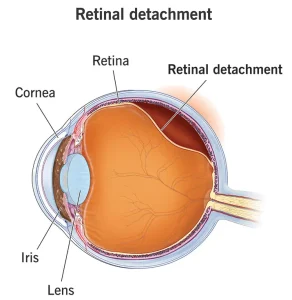
Diagnosis
Diagnosis involves the steps your healthcare professional takes to determine whether retinal detachment is causing your symptoms. The following tests and instruments may be used:
Retinal exam.
Your healthcare professional uses a bright light and special lenses to examine the back of your eye, including the retina. This tool provides a detailed view of the entire eye and allows detection of retinal holes, tears, or detachments.
Ultrasound imaging.
If bleeding inside the eye makes it difficult to see the retina clearly, an ultrasound may be used to help visualize the structures at the back of the eye.
Even if symptoms affect only one eye, both eyes are usually examined. If a retinal tear is not found during the initial visit, you may be asked to return within a few weeks. This follow-up helps ensure that a delayed retinal tear has not developed due to the same vitreous detachment. You should return sooner if you develop new symptoms.
More information: Ultrasound
Treatment
Surgery is almost always required to repair a retinal tear, hole, or detachment. Several techniques are available. Your ophthalmologist will discuss the risks and benefits of each option, and together you can decide which treatment or combination of treatments is best.
Retinal Tears
If the retina has a tear or hole but has not yet detached, your eye surgeon may recommend one of the following treatments to help prevent detachment and preserve vision:
Laser surgery (laser photocoagulation or retinopexy).
A focused laser beam is directed into the eye through the pupil. The laser creates small burns around the retinal tear, producing scar tissue that “welds” the retina to the underlying tissue.
Freezing treatment (cryopexy).
After numbing the eye, the surgeon applies a freezing probe to the outer surface of the eye directly over the tear. The freezing creates a scar that helps secure the retina to the eye wall.
Both procedures are typically performed in the eye doctor’s office, and you can usually go home shortly afterward. You may be advised to avoid activities that could jar the eyes—such as running—for a couple of weeks.
Advertisement
