
Overview
Diagnosis
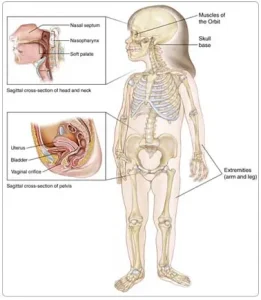
Diagnosis of rhabdomyosarcoma typically starts with a physical exam to check for unusual lumps, swelling or other concerns. If the healthcare team suspects this type of cancer, additional tests are recommended to learn more about the tumor. These often include imaging tests along with a biopsy to confirm the diagnosis.
Imaging tests create detailed pictures of the inside of the body and help show the tumor’s location, size and whether it has spread. These tests may include:
-
X-rays
-
CT scans
-
MRI scans
-
PET scans
-
Bone scans
A biopsy is essential to confirm rhabdomyosarcoma. This procedure removes a sample of tissue for testing in a lab. Because the biopsy must be done in a way that won’t interfere with future surgery, it’s best performed at a cancer center experienced in treating rhabdomyosarcoma. The two main biopsy types are needle biopsy, which uses a needle to collect tissue, and surgical biopsy, which removes a larger sample. The tissue is examined by pathologists to determine if the cells are cancerous and to gather detailed information needed for planning treatment.
Treatment
Treatment for rhabdomyosarcoma usually includes a combination of chemotherapy, surgery and radiation therapy. The exact approach depends on the tumor’s size, location, how aggressive the cancer cells appear and whether the cancer has spread.
Surgery aims to remove all cancer cells. Sometimes this is not possible if the tumor is close to important organs. In those cases, additional treatments such as chemotherapy and radiation therapy help destroy remaining cancer cells.
Chemotherapy uses strong medicines that target and kill cancer cells. These medicines are usually given through a vein, though some may be taken as pills. Chemotherapy is commonly used after surgery or radiation to target any remaining cancer cells, and sometimes before treatment to shrink the tumor and make it easier to remove or treat.
Radiation therapy uses powerful energy beams, such as X-rays or protons, to destroy cancer cells. It may be recommended after surgery to eliminate any leftover cells. Radiation may also be used instead of surgery if the tumor is in a location where surgery would be too risky.
Clinical trials may also be an option. These studies evaluate new treatments and may offer access to advanced therapies. Your healthcare team can help determine whether a clinical trial is appropriate.
Advertisement
