
Overview
Diagnosis
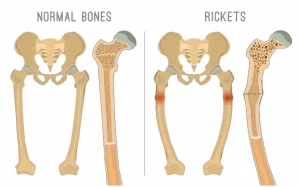
During the exam, a healthcare professional gently presses on the child’s bones to check for irregularities. Certain areas may receive closer attention. Babies with rickets may have softer skull bones and delays in the closure of the soft spots known as fontanels. An exaggerated bowing of the legs, more noticeable than the natural bowing seen in many toddlers, is a common sign. Some children also develop changes in the rib cage that flatten the chest and cause the breastbone to protrude. Larger or thicker wrists and ankles can be another sign of rickets.
Diagnosing rickets in babies can be challenging because bone and muscle changes often are not obvious until a child begins walking. A healthcare professional also pays close attention to overall growth, breathing sounds and muscle tone to look for early concerns. In children of all ages, X-rays of the affected bones can show deformities. Blood and urine tests help confirm the diagnosis and track how well treatment is working.
Treatment
Most cases of rickets respond well to vitamin D and calcium supplements. These should be taken exactly as directed, as too much vitamin D can be harmful. Healthcare professionals typically monitor progress with follow-up X-rays and blood tests to make sure bones are improving.
If a child has a rare inherited condition that leads to low phosphorus levels, supplements or medicines may be needed to correct the imbalance. In some cases, special bracing may be recommended to guide proper bone growth and help with bowleg or spinal deformities. More serious skeletal issues may require surgery when bracing alone is not enough to support healthy development.
Advertisement
