
Overview
Diagnosis
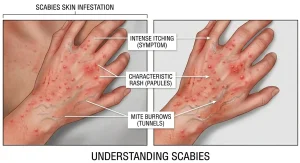
Diagnosis of scabies typically begins with an examination of the skin. A healthcare provider looks closely for signs of mites, such as burrows, rashes or intense itching. In some cases, a small sample of skin may be taken and viewed under a microscope. This helps confirm the presence of mites or their eggs and supports an accurate diagnosis.
Treatment
Treatment for scabies focuses on killing the mites and their eggs. This is done with prescription medications, which may come as creams, lotions or pills. There are no effective nonprescription treatments for scabies, so medical care is necessary.
Your healthcare provider will likely advise applying the prescribed medication over your entire body from the neck down. The medicine usually needs to stay on the skin for 8 to 14 hours before being washed off. Some people may need to repeat the treatment if symptoms continue or new signs appear.
Because the condition spreads easily, your provider may recommend treatment for all household members and close contacts, even if they do not show symptoms.
Common treatments for scabies include:
-
Permethrin cream, which kills the mites and their eggs. It is generally safe for adults, pregnant or breastfeeding individuals, and children over 2 months old.
-
Sulfur cream, applied overnight for several nights in a row. It is safe during pregnancy and for young infants under 2 months of age.
-
Ivermectin taken as a pill when topical medicines do not work. It is often used for crusted scabies or in people with weakened immune systems. It is not recommended during pregnancy, breastfeeding or for young children under 33 pounds (15 kilograms).
Even after the mites are killed, itching can continue for several weeks. If symptoms do not improve or if certain medicines cannot be used, additional skin care treatments may be recommended by your healthcare provider.
Advertisement
