
Overview
Diagnosis
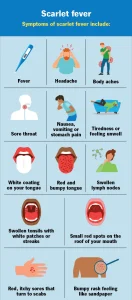
Diagnosis of scarlet fever begins with a physical exam that helps a healthcare provider evaluate key symptoms. During the exam, your provider will look at the condition of your child’s throat, tonsils and tongue, feel the neck to check for enlarged lymph nodes, and assess the appearance and texture of the rash. These findings help determine whether further testing is needed.
If strep bacteria are suspected, a throat swab is typically performed. This involves gently swabbing the tonsils and the back of the throat to collect a sample that can be tested for strep. A rapid strep test may provide results during the appointment. If the rapid test is negative but the provider still suspects a strep infection, a throat culture may be done. This test takes longer but can confirm the diagnosis.
Testing for strep bacteria is important because several illnesses can cause similar symptoms. If the tests show no strep bacteria, another condition is likely causing the illness.
Treatment
Treatment for scarlet fever usually involves a prescribed antibiotic to clear the infection. It is important that your child takes the full course of medication exactly as directed. Not completing the treatment can leave the infection unresolved and raise the risk of complications.
You may use ibuprofen or acetaminophen to help reduce fever and ease throat pain. Ask your child’s healthcare provider for the appropriate dose based on age and weight.
Most children can return to school once they have taken antibiotics for at least 12 hours and no longer have a fever.
Advertisement
