
Overview
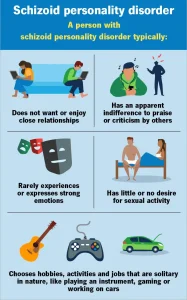
Diagnosis
Diagnosis of schizoid personality disorder begins with a physical exam to rule out other medical conditions. Your primary care doctor may refer you to a mental health professional for further evaluation.
A mental health professional will:
-
Discuss your symptoms and ask detailed questions about your thoughts, feelings, and behaviors.
-
Review your medical, personal, and family history to help determine the presence of schizoid personality disorder.
Treatment
Treatment for schizoid personality disorder can be challenging because people with this condition often prefer to keep emotional distance from others and may be hesitant to seek help. Support from friends or family can encourage starting treatment. Working with a mental health professional experienced in treating this disorder can improve quality of life.
Treatment options include:
-
Talk therapy. Cognitive behavioral therapy and other forms of talk therapy can help you explore relationships, change unhelpful beliefs or behaviors, and work toward personal goals.
-
Group therapy. Provides a safe setting to practice social skills and build support from others facing similar challenges.
-
Medicines. No specific drug treats schizoid personality disorder, but medications may help manage associated anxiety or depression.
With consistent therapy and professional support, significant progress is possible, leading to improved relationships and overall quality of life.
Advertisement
