
Overview
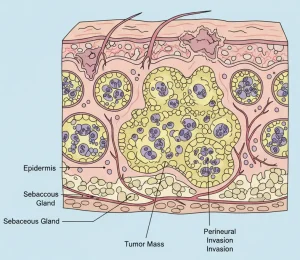
Diagnosis
Diagnosing sebaceous carcinoma may involve several tests and procedures to determine the presence and extent of the cancer:
-
Skin exam: A healthcare professional carefully inspects your skin to evaluate any suspicious areas.
-
Eye exam: If the cancer is on the eyelid, an ophthalmologist may examine the eyelid and the eye to check for signs that cancer has spread to surrounding tissues.
-
Skin biopsy: A small tissue sample may be removed and tested in a laboratory to confirm the presence of cancer cells.
Treatment
Treatment for sebaceous carcinoma typically involves surgery, with additional options considered depending on the case:
Surgery
-
Standard surgery involves removing the cancer along with some healthy tissue around it. A specialist examines the tissue edges to ensure all cancer cells are removed.
Mohs surgery
-
Mohs surgery removes thin layers of cancer-containing skin, checking each layer until only cancer-free tissue remains.
-
This technique is particularly useful for preserving healthy skin in sensitive areas such as the eyelid and face.
Radiation therapy
-
Uses high-energy beams, such as X-rays or protons, to destroy cancer cells.
-
May be used after surgery to eliminate remaining cancer cells or as the primary treatment when surgery is not an option.
Clinical trials
-
Participation in clinical trials may be an option to access new treatments. Ask your healthcare professional about eligibility for clinical studies.
Advertisement
