
Overview
Diagnosis
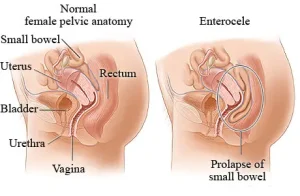
To confirm a diagnosis of small bowel prolapse, a pelvic exam is typically performed. During this exam, you may be asked to take a deep breath and hold it while bearing down as though having a bowel movement. This action, called the Valsalva maneuver, can make the prolapsed small bowel bulge downward, allowing the doctor to see the prolapse more clearly. If the prolapse is not visible while you are lying down, the exam may be repeated while you are standing to better assess the condition.
More information: Small bowel prolapse care at Mayo Clinic, Pelvic exam
Treatment
Small bowel prolapse often does not require treatment if symptoms are mild or not bothersome. When symptoms affect daily life or the prolapse is more advanced, surgery may be an effective option. For those who prefer to avoid surgery, have medical risks that make surgery unsafe or plan to become pregnant, several nonsurgical approaches are available.
Treatment options for small bowel prolapse include:
• Observation, which may be appropriate when symptoms are minimal. Self-care practices such as Kegel exercises can strengthen the pelvic muscles and help relieve discomfort. Avoiding constipation and heavy lifting may also prevent symptoms from worsening.
• Pessary use, which involves placing a silicone, plastic or rubber device inside the vagina to support the prolapsed area. These devices come in many styles and sizes, and finding the right fit may require some trial and error. Your healthcare professional will help with measuring, fitting and teaching you how to use and care for the device.
• Surgery to repair the prolapse through the vagina or abdomen, with the possibility of robotic assistance. During the procedure, the surgeon repositions the small bowel and tightens the pelvic floor tissue. In some cases, a small amount of synthetic mesh may be used to support weakened structures.
A small bowel prolapse usually does not return after treatment, but increased pressure on the pelvic floor from constipation, chronic coughing, obesity or heavy lifting can increase the risk of future problems.
Advertisement
