
Overview
Diagnosis
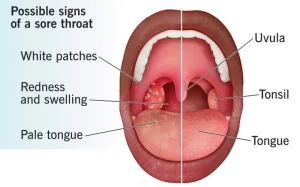
To diagnose a sore throat, a healthcare professional may perform several basic checks during the evaluation. These help identify signs of infection and other possible causes of throat pain.
-
Use a lighted tool to examine the throat, ears, and nose
-
Gently feel the neck to check for swollen lymph nodes
-
Listen to breathing using a stethoscope
A throat swab may be done to check for streptococcal bacteria, which cause strep throat. During this test, a sterile swab is rubbed over the back of the throat to collect a mucus sample, which is then sent to a lab for testing.
Many clinics use rapid antigen tests that can provide results within minutes. However, throat cultures are more accurate and usually return results within 24 to 48 hours. If a rapid test is negative but strep throat is still suspected, a throat culture may be ordered for confirmation.
Treatment
A sore throat caused by a viral infection usually improves on its own within 5 to 7 days and does not require antibiotics, as antibiotics do not treat viruses.
To reduce pain and fever, many people use mild pain relievers such as acetaminophen. For infants and children, over-the-counter pain medicines specifically made for their age group may be used, including acetaminophen or ibuprofen.
Aspirin should never be given to children or teenagers, as it has been linked to Reye’s syndrome, a rare but serious condition that causes swelling of the liver and brain.
Sore throats caused by bacterial infections require antibiotic treatment. It is important to take the full course of prescribed antibiotics, even if symptoms improve early. Stopping antibiotics too soon can allow the infection to worsen or spread to other parts of the body.
Not completing antibiotics for strep throat increases the risk of complications such as rheumatic fever, which can damage the heart, or serious kidney inflammation. If a dose is missed, a doctor or pharmacist should be consulted for guidance.
When a sore throat is caused by conditions other than viral or bacterial infections, treatment depends on the underlying diagnosis and may vary based on the specific illness involved.
Advertisement
