
Overview
Diagnosis
Tests done before birth, called prenatal screening, can help check for spina bifida and other conditions. These tests are not perfect. Some people may have positive screening results but deliver babies without spina bifida. Even with negative results, there is still a small chance the condition may be present. Talking with a healthcare professional helps clarify the benefits, limits, and risks of prenatal testing.
Spina bifida can be screened using blood tests during pregnancy, but ultrasound exams usually confirm the diagnosis.
Blood testing during pregnancy may include maternal serum alpha-fetoprotein testing. This test measures alpha-fetoprotein, a protein made by the baby that normally enters the pregnant person’s bloodstream in small amounts. Higher-than-usual levels can suggest a neural tube defect such as spina bifida, though elevated levels may also occur for other reasons.
If alpha-fetoprotein levels are high, follow-up blood testing is often needed. Elevated levels may be due to an incorrect estimate of the baby’s gestational age or the presence of more than one baby. Persistently high levels usually require further evaluation with an ultrasound exam.
Additional blood tests are sometimes done along with alpha-fetoprotein screening. These tests help screen for other conditions, such as trisomy 21, also known as Down syndrome.
Ultrasound is the most accurate way to diagnose spina bifida before birth. Ultrasound exams may be performed during the first trimester, between 11 and 14 weeks of pregnancy, or during the second trimester, between 18 and 22 weeks. Spina bifida is more reliably diagnosed during a second trimester ultrasound, which is important for identifying and ruling out conditions that may be present at birth.
Advanced ultrasound technology can detect signs such as an open spine or characteristic changes in the baby’s brain. In some cases, ultrasound findings also help determine the severity of spina bifida.
If an ultrasound confirms spina bifida, amniocentesis may be recommended. This test involves using a needle to remove a small sample of fluid from the amniotic sac. The test can help rule out genetic conditions. There is a slight risk of pregnancy loss, so discussing potential risks with a healthcare professional is important.
Treatment
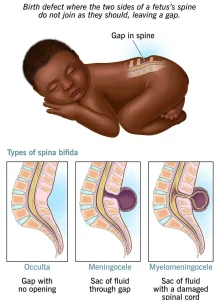
Treatment for spina bifida depends on the type and severity of the condition. Spina bifida occulta often causes no symptoms and may not need treatment. Other forms generally require medical or surgical care.
Surgery may be done before birth in some cases. Nerve damage in babies with spina bifida can worsen if untreated, so prenatal or fetal surgery may be an option before the 26th week of pregnancy. During this procedure, surgeons open the abdomen and uterus to repair the baby’s spinal cord, then close the uterus and abdomen. In some situations, a less invasive approach using a fetoscope allows surgeons to operate through small openings.
Research suggests fetal surgery may reduce disability, lower the need for walking aids, and decrease the risk of hydrocephalus. The procedure also carries risks, including premature delivery and other complications. Careful evaluation is required, and fetal surgery should only be done at specialized centers with experienced multidisciplinary teams.
Cesarean birth may be recommended for some babies with spina bifida, especially those with myelomeningocele. Many of these babies are in a breech position or have a large spinal sac, making cesarean delivery a safer option.
Surgery after birth is usually required for myelomeningocele. This surgery is typically performed within 72 hours after delivery to close the opening in the baby’s back. Early surgery helps reduce infection risk and protects the spinal cord from further injury. During the procedure, the spinal cord and exposed tissues are placed back inside the body and covered with muscle and skin. A shunt may also be placed in the brain to manage hydrocephalus.
Babies with myelomeningocele often need ongoing treatment for complications caused by nerve damage that occurred before birth. Care is usually provided by a multispecialty medical team, and additional surgeries may be required.
Management may include mobility support such as braces, crutches, walkers, or wheelchairs, along with physical therapy to promote independence. Bowel and bladder management is also important and may involve regular evaluations, medicines, catheters, surgery, or combinations of treatments.
Hydrocephalus often requires surgery to place a ventricular shunt, a tube that drains excess fluid from the brain to another part of the body. In selected cases, a minimally invasive procedure called endoscopic third ventriculostomy may be an option when specific criteria are met.
Other complications may be managed with supportive equipment and therapies. These can include orthopedic care, treatment for a tethered spinal cord, digestive problems, skin issues, and other related conditions. Most complications can be treated or managed to improve long-term quality of life.
Children with spina bifida need regular follow-up care to monitor growth, vaccinations, and overall health. Medical care is coordinated among specialists in areas such as neurology, neurosurgery, urology, orthopedics, physical and occupational therapy, rehabilitation, nutrition, education, and social support.
Parents and caregivers are an essential part of the care team. With proper guidance and support, they play a key role in managing the condition and supporting the child’s emotional and social development.
Advertisement
