
Overview
Diagnosis
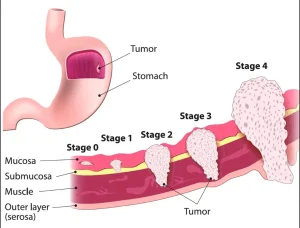
Tests and procedures used to diagnose and detect stomach cancer focus on looking inside the stomach, taking tissue samples, and using imaging to understand how far the cancer has spread. Upper endoscopy is commonly used to look for signs of cancer inside the stomach using a thin tube with a camera. If something suspicious is found, a biopsy may be done during the same procedure. The tissue sample is then sent to a lab for testing. After stomach cancer is confirmed, additional tests may be used to determine the cancer’s stage. These tests include blood tests to check overall health and to look for pieces of cancer cells in the blood, ultrasound to see how deeply the cancer has grown into the stomach wall, and imaging tests such as CT or PET scans to look for cancer that may have spread. In some cases, surgery is used to check for cancer inside the belly when imaging is unclear. The information from these tests determines the cancer stage, ranging from 0 to 4. Early stages involve cancer on the inner layers of the stomach, while stage 4 shows cancer spreading to organs such as the liver or to the lining of the belly. Your health care team may give your cancer a new stage after starting treatment. Prognosis depends on the type of cancer, the stage, your overall health, and how well the cancer responds to treatments like surgery, chemotherapy or radiation. Screening for stomach cancer may be recommended for people at high risk due to family history or genetic syndromes. In countries where stomach cancer is more common, screening is used more often. Upper endoscopy is the most common test used for screening. Researchers continue to study new ways to detect stomach cancer early, including blood tests and other methods.
More Information
Stomach cancer care at Mayo Clinic
Barium enema
CT scan
Treatment
Treatment options for stomach cancer depend on the cancer’s stage, its location, and your overall health. Treatments may include surgery, chemotherapy, radiation therapy, targeted therapy, immunotherapy and palliative care. Surgery aims to remove all of the cancer and may be the first treatment for smaller cancers. Procedures include removing small cancers from the stomach lining through endoscopic mucosal resection, removing part of the stomach through subtotal gastrectomy, or removing the entire stomach through total gastrectomy. Lymph nodes may also be removed to check for spread. Surgery may also be used to relieve symptoms if the cancer is advanced. Chemotherapy uses drugs to kill cancer cells and can be given systemically or directly into the belly. It may be given before or after surgery depending on the cancer stage. Radiation therapy uses high-energy beams to kill cancer cells and is often used with chemotherapy. It may be given before or after surgery or used to relieve symptoms in advanced cases. Targeted therapy uses medicines that attack specific changes in cancer cells and is often used for advanced stomach cancer. Immunotherapy helps the immune system find and destroy cancer cells and may be used for stage 4 or recurrent cancer. Palliative care focuses on improving comfort and quality of life, helping relieve pain and symptoms while you receive other treatments. This type of care works alongside your cancer treatment plan and can help you feel better and live longer.
Advertisement
