
Overview
Diagnosis
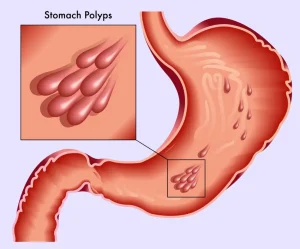
Tests used to diagnose stomach polyps focus on examining the inside of the stomach and analyzing tissue samples. Endoscopy is commonly used to view the stomach lining with a flexible tube and camera. If a polyp is found, a tissue sample may be taken during the same procedure. This sample, known as a biopsy, is sent to a lab for analysis to determine the type of polyp and whether cancerous changes are present.
More Information
Upper endoscopy
Treatment
Treatment depends on the type, size and behavior of stomach polyps. Small polyps that are not adenomas may not need treatment because they rarely cause symptoms or become cancerous. A healthcare professional may recommend monitoring them with periodic endoscopy. Larger polyps may need to be removed, and many can be taken out during endoscopy. Adenomas are usually removed because they have the potential to turn into cancer. Polyps linked with familial adenomatous polyposis are also removed due to their cancer risk. Follow-up endoscopy is often recommended to check for new or recurring polyps. When stomach polyps are associated with H. pylori infection, treatment typically involves a combination of medicines, including antibiotics. Treating the infection can help hyperplastic polyps shrink or disappear and may prevent them from coming back.
Advertisement
