
Overview
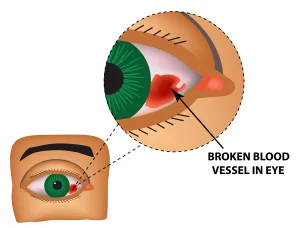
Diagnosis
A subconjunctival hemorrhage is most often diagnosed through a simple eye examination. A healthcare professional can identify the condition just by looking at the bright red patch on the white part of the eye. A light and magnifying tool may be used to check the eye more closely. Your healthcare professional might also ask about recent injuries, coughing episodes, heavy lifting, use of blood-thinning medicines or any medical conditions that increase bleeding risk. In most cases, no additional tests are needed unless the bleeding happens often or is linked to an injury.
Treatment
A subconjunctival hemorrhage usually does not require treatment. The condition is harmless and typically clears on its own within one to two weeks. As the blood absorbs, the color may change from bright red to brown or yellow before fading completely. Artificial tears may be recommended if your eye feels irritated. You do not need antibiotic drops because there is no infection.
If an underlying cause is suspected, such as high blood pressure or a bleeding disorder, your healthcare professional may recommend further evaluation or treatment. If the condition occurs repeatedly, you may need tests to check how your blood clots or to review your medicines. In rare cases linked to trauma, additional treatment may be required depending on the injury.
Most people recover fully without complications, and once the blood reabsorbs, the eye returns to its normal appearance.
Advertisement
