
Overview
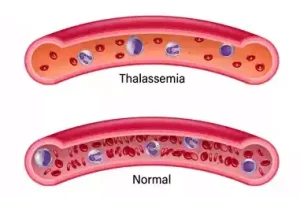
Diagnosis
Most children with moderate to severe thalassemia show symptoms within the first two years of life. If a healthcare professional suspects thalassemia, blood tests can confirm the diagnosis.
Blood tests can reveal the number of red blood cells and any irregular changes in their size, shape, or color. They also can be used to detect gene changes in DNA.
Prenatal testing
Testing before birth can determine whether a baby has thalassemia and how severe it might be. Prenatal tests include:
• Chorionic villus sampling. A small piece of the placenta is removed and analyzed in a lab. This test is usually done around the 11th week of pregnancy.
• Amniocentesis. A sample of the fluid surrounding the unborn baby is tested, typically around the 16th week of pregnancy.
Treatment
Mild thalassemia trait usually does not require treatment.
For moderate to severe thalassemia, treatment options may include:
• Frequent blood transfusions. Some people require transfusions as often as every few weeks. Over time, this can lead to excess iron in the blood, which may damage the heart, liver, and other organs.
• Chelation therapy. Medicines remove extra iron from the body. Options include deferasirox (Exjade, Jadenu) and deferiprone (Ferriprox) taken by mouth, or deferoxamine (Desferal) given through a vein.
• Other medicines. Luspatercept (Reblozyl) is given by injection to reduce the need for transfusions. Hydroxyurea (Hydrea, Droxia) can help lower the risk of complications from thalassemia.
• Stem cell transplant. Also called a bone marrow transplant, this procedure can eliminate the need for lifelong transfusions and iron-control medications. Stem cells are received from a donor with matching cells, often a healthy sibling.
Advertisement
