
Overview
Diagnosis
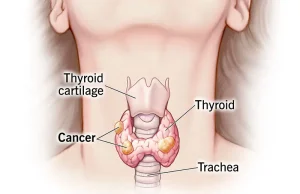
Thyroid cancer is diagnosed through a combination of physical exams, imaging tests, biopsies, and lab studies.
Physical exam
Your healthcare provider examines your neck to feel for changes in the thyroid, such as nodules or lumps. They may ask about risk factors, including past radiation exposure and family history of thyroid cancer.
Thyroid function blood tests
Tests measuring thyroid-stimulating hormone (TSH) and thyroid hormone levels can provide information about thyroid health and possible abnormalities.
Ultrasound imaging
High-frequency sound waves create images of the thyroid and surrounding structures. Ultrasound helps identify suspicious nodules, calcifications, or irregular borders. It may also be used to evaluate lymph nodes in the neck for potential cancer spread.
Fine-needle aspiration biopsy
A thin needle is inserted into the thyroid nodule, usually guided by ultrasound, to collect cells for laboratory analysis. A pathologist examines the sample to determine whether cancer is present. Molecular marker testing may be used to detect gene changes in indeterminate cases.
Radioactive iodine scan
After surgery, a radioactive iodine scan may identify remaining thyroid cancer cells. Cancer cells absorb the iodine, making them visible on imaging. This is most useful for papillary and follicular thyroid cancers.
Other imaging tests
CT and MRI may be used to determine whether cancer has spread beyond the thyroid.
Genetic testing
For medullary thyroid cancer, which can be inherited, genetic counseling and testing may be recommended to assess risk for other cancers and implications for family members.
Thyroid cancer staging
Staging uses test results to determine the extent of the cancer, ranging from stage I to IV. Lower stages usually indicate limited spread and higher likelihood of responding to treatment, while higher stages may involve spread beyond the thyroid. Different types of thyroid cancer have unique staging systems, and age may influence staging for differentiated thyroid cancers.
Treatment
Thyroid cancer treatment depends on the type, stage, overall health, and patient preferences. Most thyroid cancers have an excellent prognosis.
Active surveillance
For very small papillary thyroid cancers (microcarcinomas), treatment may be delayed. Regular monitoring with ultrasound and blood tests can detect growth early, allowing treatment to begin only if necessary.
Surgery
Surgical options depend on the cancer’s size, type, and spread:
• Thyroidectomy – removal of all or most of the thyroid, often preserving parathyroid glands to maintain calcium regulation.
• Thyroid lobectomy – removal of half of the thyroid for localized cancers without lymph node involvement.
• Lymph node dissection – removal of affected lymph nodes in the neck if cancer has spread.
Surgical risks include bleeding, infection, nerve damage affecting the vocal cords, and hypocalcemia from parathyroid injury. Recovery typically takes 10 to 14 days, with possible restrictions on strenuous activity.
Thyroid hormone therapy
Pill-form therapy replaces or supplements thyroid hormones after partial or total thyroid removal. It can also suppress thyroid-stimulating hormone (TSH) to reduce the risk of cancer cell growth.
Radioactive iodine
This treatment targets remaining thyroid cells after surgery, primarily for differentiated thyroid cancers. It is usually administered orally as a capsule or liquid. Side effects may include dry mouth, mouth pain, eye inflammation, and altered taste or smell. Safety precautions are required for several days following treatment.
Alcohol ablation
Also called ethanol ablation, alcohol is injected into small areas of thyroid cancer under ultrasound guidance to shrink cancer cells. This may be an option for small metastatic areas or patients not suitable for surgery.
Treatment for advanced thyroid cancers
Aggressive cancers may require:
• Targeted drug therapy – drugs that attack specific chemicals or gene changes in cancer cells.
• Radiation therapy – external beam radiation to destroy cancer cells or control pain from bone metastases.
• Chemotherapy – chemical drugs to kill fast-growing cancer cells, sometimes combined with radiation therapy.
• Thermal ablation – radiofrequency ablation or cryoablation to destroy cancer cells in lungs, liver, or bones.
Supportive (palliative) care
Palliative care provides relief from symptoms and improves quality of life, even alongside surgery, chemotherapy, or radiation therapy. It is provided by a team of doctors, nurses, and specialists to support both patients and families.
Follow-up for thyroid cancer survivors
Post-treatment follow-up may include:
• Physical exam of the neck
• Blood tests (thyroglobulin, calcitonin, or carcinoembryonic antigen)
• Ultrasound exams
• Additional imaging such as CT or MRI
Follow-up appointments typically occur once or twice a year for several years to monitor for recurrence.
Advertisement
