
Overview
Diagnosis
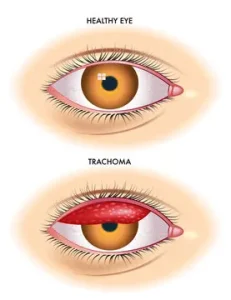
Trachoma can be diagnosed through a physical examination by your doctor. In some cases, a sample of bacteria from the eyes may be sent to a laboratory for testing. Lab tests may not always be available in areas where trachoma is common.
Treatment
Treatment for trachoma depends on the stage of the disease.
Medications
In early stages, antibiotics alone may be enough to eliminate the infection. Your doctor may prescribe:
• Tetracycline eye ointment
• Oral azithromycin (Zithromax), which is more effective but more costly
The World Health Organization (WHO) recommends community-wide antibiotics when more than 10% of children are affected to reduce the spread of trachoma.
Surgery
Later stages of trachoma, such as painful eyelid deformities, may require surgical intervention:
• Eyelid rotation surgery (bilamellar tarsal rotation) to rotate eyelashes away from the cornea and prevent further corneal scarring
• Corneal transplantation if vision is severely impaired due to corneal clouding
• Epilation, or removal of eyelashes, may be needed repeatedly in some cases
Preparing for your appointment
You may first see a primary care doctor or be referred to an ophthalmologist. To prepare:
• List symptoms, including changes in vision
• Record key personal information, recent travel, or use of new eye products
• Bring a list of all medications, vitamins, and supplements
Questions to ask your doctor may include:
• What is the most likely cause of my symptoms?
• What other possible causes should be considered?
• What tests are needed?
• Is this condition temporary or chronic?
• What is the best course of action?
• Will there be long-term complications?
• Are there any activity restrictions?
• Should I see a specialist, and what are the costs and insurance coverage?
• Are there generic alternatives to prescribed medicine?
• Can you provide brochures or recommended websites?
Your doctor may ask about:
• Previous similar problems
• Symptom onset and severity
• Factors that improve or worsen symptoms
• Household members with similar symptoms
• Current treatments being used
What you can do in the meantime
While waiting for your appointment, practice good hygiene to reduce the risk of spreading trachoma:
• Wash your hands thoroughly and frequently before touching your eyes
• Change towels, washcloths, and pillowcases regularly and avoid sharing them
• Discard eye cosmetics and do not use others’ cosmetics
• Stop wearing contact lenses until evaluated by an eye doctor
• Infected children should avoid close contact with others
These steps help minimize infection risk and support faster recovery.
Advertisement
