
Overview
Diagnosis
A prompt evaluation is crucial to diagnose the cause of a transient ischemic attack (TIA) and to determine the best treatment. Your healthcare professional may rely on the following:
Physical exam and tests
A physical and neurological exam is performed, which may include testing:
• Vision and eye movements
• Speech and language
• Muscle strength, reflexes, and sensory function
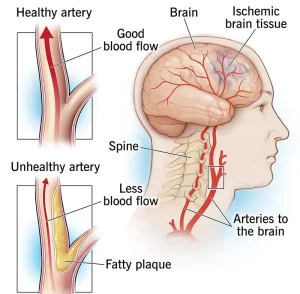
Your healthcare professional may use a stethoscope to listen to the carotid artery for a whooshing sound called a bruit, which may indicate atherosclerosis. An ophthalmoscope may be used to check for cholesterol or platelet fragments (emboli) in the tiny blood vessels of the retina.
Risk factors for stroke such as high blood pressure, high cholesterol, diabetes, and elevated homocysteine levels may also be evaluated.
Imaging and other tests
• Carotid ultrasonography to detect narrowing or clotting in the carotid arteries
• Computerized tomography (CT) or CT angiography (CTA) to examine the brain and arteries in the neck and head; a contrast dye may be used for CTA
• Magnetic resonance imaging (MRI) or magnetic resonance angiography (MRA) to create 3D views of the brain and arteries; contrast material may be used in MRA
• Echocardiography to check for heart-related causes of emboli, including transthoracic (TTE) or transesophageal (TEE) exams
• Arteriography to view arteries in the brain not usually seen on X-ray; involves inserting a catheter and injecting dye to highlight the arteries
Treatment
Treatment after a TIA focuses on correcting the underlying cause and preventing stroke.
Medicines
Your healthcare professional may prescribe medicines depending on the cause and location of the TIA:
• Anti-platelet drugs to prevent platelets from sticking together and forming clots. Options include aspirin, clopidogrel (Plavix), aspirin plus clopidogrel for a limited period, cilostazol, ticagrelor (Brilinta), or low-dose aspirin with dipyridamole
• Anticoagulants such as heparin, warfarin (Jantoven), or direct oral anticoagulants (apixaban, rivaroxaban, edoxaban, dabigatran) to reduce clotting risk
Surgery
• Carotid endarterectomy may be performed to remove fatty deposits from narrowed carotid arteries, preventing further TIA or stroke
• Carotid angioplasty and stent placement uses a balloon device to open a clogged artery and a stent to keep it open
Early evaluation and appropriate treatment are essential to reduce the risk of future strokes after a transient ischemic attack.
Advertisement
