
Overview
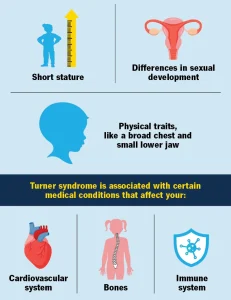
Diagnosis
If your child’s doctor suspects Turner syndrome based on signs and symptoms, a chromosome analysis will be done. This test uses a blood sample, but sometimes a cheek scraping or skin sample may also be requested. The analysis checks for a missing X chromosome or a change in one of the X chromosomes.
Prenatal diagnosis
Turner syndrome can sometimes be identified during fetal development. Certain features seen on an ultrasound may raise concern for Turner syndrome or another genetic condition affecting development.
Prenatal screening tests that examine the baby’s DNA in the mother’s blood may also show an increased risk. However, a karyotype during pregnancy or after delivery is recommended to confirm the diagnosis.
If Turner syndrome is suspected during pregnancy, your obstetrician may discuss the option of confirming the diagnosis before birth. Two prenatal procedures can help make a diagnosis:
• Chorionic villus sampling, which involves taking a small piece of placental tissue for chromosome testing. This is usually done between 11 and 14 weeks of pregnancy.
• Amniocentesis, which involves collecting a sample of amniotic fluid to study the baby’s chromosomes. This is typically done after 14 weeks of pregnancy.
It is important to review the benefits and risks of prenatal testing with your doctor.
Treatment
Because symptoms and complications differ widely, treatment plans are personalized to address each individual’s needs. Ongoing evaluation and monitoring for medical or mental health concerns can help detect and manage issues early.
Primary treatments for nearly all girls and women with Turner syndrome involve hormone therapies. Growth hormone therapy is usually given daily during childhood and early adolescence to support height and bone development. Starting treatment early can improve height outcomes.
Estrogen therapy is usually needed to begin puberty. It is often started around age 11 or 12. Estrogen supports breast development, helps the uterus grow, improves bone mineralization and, when used with growth hormone, may support height. Estrogen replacement therapy usually continues until the typical age of menopause.
Other treatments are used when specific problems arise. Regular checkups have greatly improved health and quality of life for girls and women with Turner syndrome. Preparing your child for the transition from pediatric to adult care is important. A primary care doctor can help coordinate care among specialists throughout life.
Health care team
Turner syndrome may involve developmental concerns and medical complications, so multiple specialists may participate in care. Teams may change over time depending on needs. Specialists may include:
• Endocrinologist
• Gynecologist
• Medical geneticist
• Cardiologist
• Orthopedist
• Urologist
• ENT specialist
• Gastroenterologist
• Ophthalmologist
• Audiologist
• Psychologist or psychiatrist
• Developmental therapist
• Special education instructors
• Reproductive endocrinologist
Pregnancy and fertility treatment
Only a small percentage of women with Turner syndrome can become pregnant without fertility treatment. Even those who can conceive naturally often experience early ovarian failure and infertility. Discussing reproductive plans with your health care provider is essential.
Some women with Turner syndrome may become pregnant using donated eggs or embryos. A reproductive endocrinologist can discuss options and help estimate the chances of success.
Most pregnancies in women with Turner syndrome are considered high risk. It is important to review the risks with a high-risk obstetrician or reproductive endocrinologist before attempting pregnancy.
Advertisement
