
Overview
Diagnosis
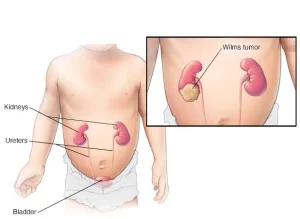
Wilms tumor is diagnosed through a combination of clinical evaluation, laboratory testing, and imaging studies. In some complex cases, a 3D printer may even be used to create a model of the patient’s body to help plan surgery precisely.
To diagnose Wilms tumor, healthcare professionals may perform:
-
Physical examination: The doctor checks for swelling, lumps, or other signs that may indicate a tumor in the abdomen.
-
Blood and urine tests: These assess kidney function and identify any abnormalities that suggest tumor activity.
-
Imaging tests: Ultrasound, CT scans, MRI, and chest X-rays are used to visualize the kidneys and determine the size, location, and spread of the tumor.
Once Wilms tumor is identified, staging tests are conducted to see if the cancer has spread to other parts of the body. Chest imaging and bone scans are commonly used for this purpose.
The cancer is classified into stages to guide treatment:
-
Stage 1: Cancer is limited to one kidney and can be completely removed by surgery.
-
Stage 2: Cancer has spread beyond the kidney but can still be removed surgically.
-
Stage 3: Cancer has spread to nearby lymph nodes or other areas within the abdomen and may not be completely removable by surgery.
-
Stage 4: Cancer has spread to distant organs such as the lungs, liver, bones, or brain.
-
Stage 5: Cancer is found in both kidneys, and each kidney is staged separately.
Accurate staging is critical to choosing the right combination of treatments.
Treatment
Treatment for Wilms tumor typically involves a combination of surgery, chemotherapy, and in some cases, radiation therapy. Because this cancer is rare, it is best managed at a specialized pediatric cancer center.
Surgery
Surgery is often the first step and serves both to remove the tumor and confirm the diagnosis through tissue analysis. The main surgical options include:
-
Partial nephrectomy: Removal of only the tumor and a small portion of the kidney, used when the tumor is small or when preserving kidney function is crucial.
-
Radical nephrectomy: Removal of the entire kidney, nearby tissues, lymph nodes, and sometimes part of the ureter and adrenal gland. The remaining kidney takes over normal kidney function.
-
Bilateral surgery: If both kidneys are affected, surgeons remove as much cancer as possible while trying to preserve kidney tissue. If both kidneys must be removed, dialysis or kidney transplantation becomes necessary.
Chemotherapy
Chemotherapy uses powerful drugs to destroy cancer cells throughout the body. It is usually given intravenously and often involves multiple medications.
-
Before surgery, it may shrink the tumor to make removal easier.
-
After surgery, it helps eliminate any remaining cancer cells.
-
In cases involving both kidneys, chemotherapy is typically given first to improve surgical outcomes.
Common side effects include nausea, vomiting, fatigue, loss of appetite, hair loss, and increased infection risk.
Radiation Therapy
Radiation therapy uses high-energy beams to kill cancer cells. It is often used after surgery to target any remaining cancer cells or to treat cancer that has spread.
-
Sessions are carefully planned to minimize damage to healthy tissues.
-
Side effects may include nausea, diarrhea, skin irritation, and fatigue.
In some specialized centers, proton beam therapy may be used to deliver precise radiation while sparing healthy tissue.
The combination of early diagnosis, modern imaging, advanced surgical techniques, and targeted therapies has greatly improved the survival rate for children with Wilms tumor. Regular follow-up care is essential to monitor kidney function and prevent recurrence.
Advertisement
