
Overview
Diagnosis
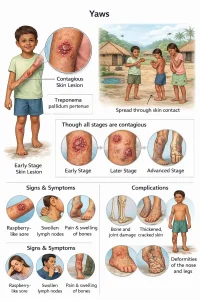
Yaws is diagnosed based on a combination of clinical evaluation and laboratory testing. A healthcare professional examines the characteristic skin lesions—initially a papillomatous or ulcerative sore, often called the “mother yaw.” These lesions usually appear on the legs, arms, or face and are highly contagious in the early stages. To confirm the diagnosis, blood tests are performed, including nontreponemal tests such as the VDRL or RPR and treponemal-specific tests like the TPHA or FTA-ABS. In endemic regions, rapid point-of-care tests may also be used to detect Treponema pallidum subsp. pertenue, the bacterium that causes yaws.
Treatment
Treatment for yaws is simple and highly effective with antibiotics. A single oral dose of azithromycin is the treatment of choice recommended by the World Health Organization (WHO). If azithromycin cannot be used, an injection of benzathine penicillin is an effective alternative.
To prevent the spread of yaws in affected communities:
-
All close contacts and household members should be examined and treated if necessary
-
Good hygiene and wound care help prevent reinfection
-
Mass treatment campaigns in endemic areas can help eliminate the disease
With timely treatment, the infection clears completely, and complications such as bone deformities or chronic ulcers can be avoided.
Advertisement
