
Overview
Diagnosis
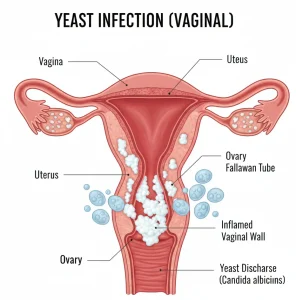
To diagnose a yeast infection, a healthcare professional begins by asking about your medical history, including any previous vaginal infections or sexually transmitted infections. A pelvic exam is then performed to check the outer genital area and the inside of the vagina and cervix using a speculum, which gently holds the vaginal walls open for better visibility. During the exam, a sample of vaginal fluid may be collected and sent to a lab to identify the presence of yeast and determine the specific type of fungus causing the infection. Knowing the fungus helps the healthcare professional recommend the most effective treatment.
Treatment
Treatment for yeast infections depends on the severity and frequency of the infections.
For mild to moderate symptoms and occasional infections, common options include:
-
Short-course vaginal therapy using antifungal medicines for 3 to 7 days. These come as creams, ointments, tablets, or vaginal suppositories, such as miconazole (Monistat 3) and terconazole.
-
A single oral dose of fluconazole (Diflucan). For severe symptoms, an additional dose may be given three days later.
Two newer oral medications have also been approved:
-
Oteseconazole (Vivjoa), for people who cannot get pregnant and experience recurrent infections.
-
Ibrexafungerp (Brexafemme), for cases that do not respond to standard antifungal treatments.
For severe or recurrent yeast infections, additional treatments may include:
-
Long-course vaginal therapy, where antifungal medicine is used daily for up to two weeks, followed by once-weekly doses for six months.
-
Multiple doses of oral antifungal medicines, taken over several days.
-
Boric acid capsules inserted into the vagina, used only for yeast infections caused by resistant Candida species. This treatment is not suitable during pregnancy and must never be taken by mouth.
If symptoms persist or return within two months, it’s important to follow up with a healthcare professional for further evaluation and treatment adjustment.
Advertisement
