
Overview
Diagnosis
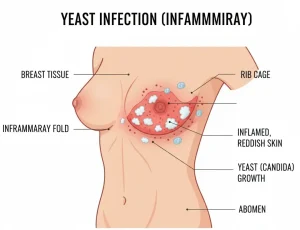
To diagnose a yeast infection under the breast, a healthcare professional begins by examining the skin folds for common signs such as redness, itching, burning, or a moist rash with small bumps. The area may also have a musty odor or appear cracked and painful.
If the diagnosis isn’t clear, your healthcare professional may perform tests such as:
-
Skin scraping or swab test to collect a sample for microscopic examination and confirm the presence of Candida yeast.
-
Fungal culture to identify the specific strain of yeast causing the infection.
-
Wood’s lamp examination, where a special light is used to look for signs of fungal or bacterial growth.
These tests help rule out other skin conditions that can appear similar, such as eczema, bacterial infections, or contact dermatitis.
Treatment
Treatment for a yeast infection under the breast focuses on relieving symptoms, eliminating the yeast, and preventing future infections.
Common treatment options include:
-
Topical antifungal creams or powders, such as clotrimazole, miconazole, nystatin, or ketoconazole, applied directly to the affected area.
-
Oral antifungal medications, like fluconazole or itraconazole, for more severe or recurring infections.
-
Antifungal powders or drying agents to keep the skin folds dry and reduce moisture buildup.
-
Mild corticosteroid creams, prescribed for short-term use to ease itching and inflammation.
Self-care steps can also speed up healing and prevent recurrence:
-
Keep the area clean and dry by washing gently with mild soap and water, then patting dry.
-
Wear breathable, cotton bras and avoid tight clothing that traps moisture.
-
Change out of sweaty clothes promptly after exercise or heat exposure.
-
Use absorbent pads or moisture-wicking fabric under the breasts to reduce friction and humidity.
With proper treatment, most yeast infections under the breast improve within one to two weeks. Chronic or recurring cases may need ongoing antifungal care or evaluation for underlying conditions such as diabetes or obesity.
Advertisement
