
Overview
Diagnosis
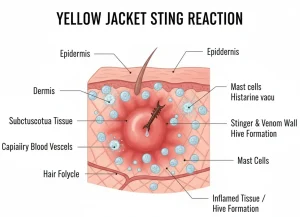
Diagnosis of a yellow jacket sting is typically based on symptoms and a visual inspection of the affected area. Most people know they’ve been stung because the sting is immediate and painful. However, if you didn’t see the insect, your healthcare professional can still identify a yellow jacket sting by examining the wound and your reaction to it.
Your healthcare professional may:
-
Inspect the sting site for redness, swelling, pain, and a central puncture mark.
-
Ask about your symptoms such as itching, burning, or widespread rash.
-
Evaluate for allergic reactions, especially if you develop hives, swelling of the face or throat, dizziness, or difficulty breathing.
-
Perform allergy testing if you have a history of severe reactions to stings. Skin tests or blood tests can help confirm a yellow jacket venom allergy.
Most stings cause only mild local reactions, but a severe systemic allergic reaction (anaphylaxis) requires urgent medical attention.
Treatment
Treatment for a yellow jacket sting depends on the severity of your symptoms. Most stings heal within a few days with home care, but allergic reactions may require emergency treatment.
For mild to moderate reactions:
-
Clean the area with soap and water to prevent infection.
-
Apply a cold pack for 10–15 minutes at a time to reduce pain and swelling.
-
Take oral antihistamines to ease itching and redness.
-
Use topical corticosteroid creams or calamine lotion to soothe the skin.
-
Elevate the affected area if possible to minimize swelling.
For severe allergic reactions (anaphylaxis):
-
Seek emergency medical help immediately.
-
Use an epinephrine auto-injector (EpiPen) if prescribed.
-
Receive emergency treatments such as oxygen, intravenous fluids, and medications like corticosteroids or antihistamines in a hospital.
To prevent future stings:
-
Avoid wearing bright colors or strong scents outdoors.
-
Keep food and drinks covered when outside.
-
Stay away from garbage cans or areas where yellow jackets are active.
-
Consider venom immunotherapy (allergy shots) if you have a known allergy, as it can significantly reduce the risk of severe reactions in the future.
Request an appointment
Advertisement
