
Overview
Diagnosis
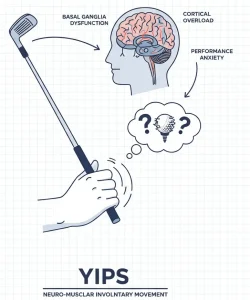
There is no specific or standard test used to diagnose the yips. Diagnosis is generally based on a detailed description of symptoms and movement patterns. A healthcare professional, often a sports medicine or neurology specialist, may perform a neurological examination to rule out other possible causes such as focal dystonia, tremors, or nerve conditions.
In some cases, video recording the wrist and hand during a putting stroke can help identify involuntary muscle movements or spasms associated with the yips. Observing the motion helps the professional understand whether the problem is physical, psychological, or a combination of both.
Treatment
Treatment for the yips focuses on reducing involuntary muscle movements and managing anxiety or overuse of specific muscles. Different strategies may be effective depending on the cause.
Some commonly recommended approaches include:
-
Changing grip technique: Switching to a different grip can engage different muscle groups, reducing the involuntary motion.
-
Using a different putter: A longer or specially designed putter can help shift control from the hands and wrists to the arms and shoulders.
-
Altering focus: Looking at the hole instead of the ball while putting can help reset movement patterns and relieve mental tension.
-
Mental skills training: Relaxation exercises, visualization, mindfulness, and positive thinking can reduce performance anxiety and improve concentration.
-
Medications: In some cases, medicines such as benzodiazepines, baclofen, or propranolol may help control muscle spasms or tremors.
-
Botulinum toxin injections: A targeted injection of botulinum toxin (such as Botox or Dysport) into overactive muscles can reduce contractions and ease symptoms related to focal dystonia.
For professional or competitive athletes, it’s important to check sport-specific rules before using any medication or injections, as regulations on substances can vary between organizations.
Preparing for your appointment
If symptoms persist, it may be helpful to consult a healthcare professional experienced in sports-related conditions. Bringing detailed information can make the evaluation more effective, such as:
-
A description of your symptoms and when they occur
-
A list of medications and supplements you take
-
Relevant medical or family health history
-
Questions you want to ask your healthcare team
What to expect
During your visit, your healthcare professional may ask:
-
When your symptoms first appeared and how often they occur
-
Whether the symptoms happen only during putting or in other activities
-
What makes the symptoms better or worse
-
Whether stress or competition triggers the movements
Because the yips often happen under high-pressure or competitive situations, demonstrating them during an appointment may not always be possible.
Advertisement
