
Overview
Diagnosis
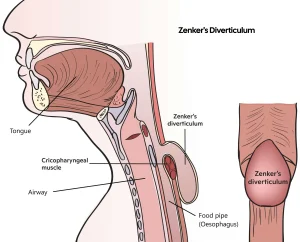
Diagnosis of Zenker’s diverticulum is usually made by an ear, nose, and throat (ENT) specialist through a detailed medical history, physical examination, and imaging tests. The condition often presents with symptoms such as difficulty swallowing, regurgitation of undigested food, coughing, or bad breath, which help guide the diagnostic process.
The primary test used for diagnosis is the barium swallow, a specialized imaging procedure that allows clear visualization of the esophagus and any pouch formation. During the test, a patient swallows a liquid containing barium sulfate, which coats the lining of the digestive tract and makes it visible on X-rays. The results show whether a pouch or bulge (diverticulum) is present in the esophagus.
Other evaluations may include an endoscopic examination of the esophagus to assess its structure and function. However, this is typically done after imaging confirms the presence of Zenker’s diverticulum.
Treatment
Treatment for Zenker’s diverticulum depends on the severity of symptoms and the size of the pouch. People with mild symptoms may find relief by adjusting their eating habits, such as eating softer foods and taking smaller bites. However, surgery or minimally invasive procedures are often required to correct the problem.
Types of procedures
Repairing the esophagus through endoscopic or open surgical techniques is the mainstay of treatment for Zenker’s diverticulum. ENT specialists generally perform these procedures.
There are two primary endoscopic methods used to treat Zenker’s diverticulum:
-
Rigid endoscope procedure
-
Performed under general anesthesia
-
A rigid endoscope is used to access the esophagus
-
A laser or surgical stapler widens the opening of the pouch
-
In some cases, the pouch can be removed completely, a process known as an endoscopic diverticulectomy
-
-
Flexible endoscope procedure
-
Done under deep sedation or general anesthesia
-
A flexible endoscope is used
-
Electrocautery cuts the tissue separating the pouch from the esophagus
-
Surgical clips may be applied to control any bleeding
-
For large pouches or cases not suitable for endoscopy, open surgery may be necessary. This involves making a small incision in the neck to remove the pouch. Open surgery typically takes 2 to 3 hours, and patients usually remain in the hospital for one or more days.
Possible complications
Although surgical treatments for Zenker’s diverticulum are generally safe and effective, there are potential risks associated with both endoscopic and open procedures.
Common complications may include:
-
Infection
-
Blood clots
-
Reaction to anesthesia
-
A tear or hole in the esophagus
-
Dental injury during endoscopic procedures
Results and recovery
Most people experience significant improvement in symptoms following surgery. Both endoscopic and open surgeries typically result in easier swallowing and reduced regurgitation.
-
Endoscopic procedures often require only a short hospital stay, usually one night
-
Open surgery may leave a small scar on the neck and carries a slightly higher risk of esophageal perforation
-
Large diverticula are often best treated with open surgery to ensure complete removal
If symptoms return or the pouch redevelops, another procedure may be needed. However, in some cases, recurrent diverticula do not cause symptoms.
Preparing for your appointment
If you experience difficulty swallowing or other symptoms of Zenker’s diverticulum, make an appointment with your primary care provider. You may be referred to an ENT specialist for further evaluation.
To prepare for your visit, consider the following:
-
Ask if any fasting or special preparation is needed before tests
-
Make a list of your symptoms, including when they began and what affects them
-
Note your medical history, medications, and supplements
-
Bring a family member or friend for support
-
Prepare questions for your doctor, such as:
-
What tests will I need?
-
What treatment options are best for me?
-
What lifestyle changes can help reduce symptoms?
-
Outlook
Most patients who undergo treatment for Zenker’s diverticulum experience lasting relief and improved swallowing function. Advances in minimally invasive endoscopic techniques continue to enhance recovery times and outcomes. While recurrence is possible, it is relatively uncommon and can often be effectively managed with additional treatment.
Advertisement
