
Overview
Pet allergy is an allergic reaction to proteins found in an animal’s skin cells, saliva, or urine. These allergens are commonly associated with pets such as cats, dogs, rodents, and birds. When a person with a pet allergy is exposed to these substances, their immune system reacts by producing symptoms that affect the nose, eyes, skin, or lungs.
Pet allergies are often triggered by microscopic flakes of skin known as dander, which animals naturally shed. These allergens can easily spread through the air and stick to furniture, clothing, and carpets, allowing them to remain in the environment even after the pet is no longer present.
Although pet allergies are common, symptoms can vary from mild irritation to more serious allergic reactions that affect breathing. Proper management and reducing exposure to allergens can help control symptoms.
Symptoms
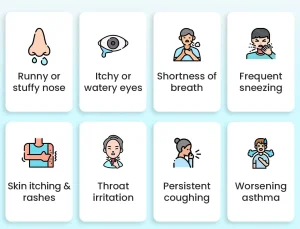
Pet allergy symptoms usually occur shortly after exposure to an animal or areas where animal allergens are present.
Common symptoms include:
-
Sneezing
-
Runny or stuffy nose
-
Itchy or watery eyes
-
Nasal congestion
-
Coughing
-
Itchy throat or roof of the mouth
-
Skin rash or hives
-
Red or irritated skin after contact with a pet
In some people, pet allergies may also trigger asthma symptoms such as:
-
Wheezing
-
Shortness of breath
-
Chest tightness
-
Difficulty breathing
Symptoms may vary depending on the individual’s sensitivity and the level of exposure.
Causes
Pet allergies occur when the immune system mistakenly identifies harmless proteins from animals as harmful substances. In response, the body releases chemicals such as histamine, which cause allergy symptoms.
These allergens are commonly found in:
-
Animal dander (tiny flakes of skin)
-
Saliva that dries on the animal’s fur
-
Urine
-
Sweat glands in the skin
Cats are often considered a common trigger because their allergens are lightweight and easily spread through the air and household surfaces.
Risk Factors
Certain factors may increase the likelihood of developing pet allergies.
Risk factors include:
-
Family history of allergies or asthma
-
Existing allergic conditions such as hay fever
-
Frequent exposure to pets
-
Living in environments where animal allergens accumulate easily
Children who grow up in environments with strong allergen exposure may be more likely to develop allergic reactions if they have a genetic predisposition.
Complications
If pet allergies are not managed properly, they can lead to complications that affect respiratory health.
Possible complications include:
-
Chronic nasal congestion
-
Sinus infections
-
Worsening asthma symptoms
-
Frequent coughing or breathing difficulties
-
Skin irritation or eczema flare-ups
Long-term exposure to allergens may make symptoms more persistent and harder to control.
Prevention
Reducing exposure to pet allergens is the most effective way to prevent allergy symptoms.
Helpful preventive steps include:
-
Keeping pets out of bedrooms and sleeping areas
-
Washing hands after touching animals
-
Cleaning floors, carpets, and furniture regularly
-
Using air purifiers to reduce airborne allergens
-
Bathing pets regularly to reduce dander
-
Washing bedding and fabrics frequently
-
Consulting a healthcare professional about allergy medications if needed
Taking steps to control indoor allergens can significantly reduce symptoms and improve comfort for people with pet allergies.
Advertisement
