
Overview
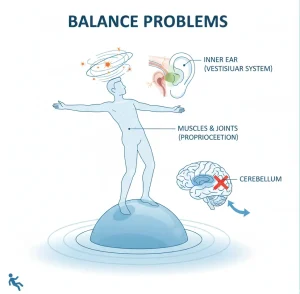
Balance problems refer to difficulties maintaining stability and coordination while standing, walking, or moving. They can cause a sensation of unsteadiness, dizziness, or the feeling that the surroundings are spinning. Balance problems are common and may occur at any age, though they are more frequent in older adults. These issues can result from problems affecting the inner ear, brain, nerves, muscles, or vision, and they can range from mild to severe.
Symptoms
Symptoms of balance problems vary depending on the underlying cause and may occur suddenly or gradually. Common symptoms include:
-
Feeling unsteady or off-balance
-
Dizziness or lightheadedness
-
Sensation of spinning or movement
-
Difficulty walking straight
-
Feeling as if you may fall
-
Nausea or vomiting in some cases
Symptoms may worsen with movement, standing up quickly, or changes in head position.
Causes
Balance problems can arise from a wide range of medical conditions and external factors. Common causes include:
-
Inner ear disorders affecting balance control
-
Neurological conditions involving the brain or nerves
-
Muscle weakness or joint problems
-
Vision disturbances
-
Low blood pressure or dehydration
-
Certain medications that affect coordination or alertness
Temporary balance issues may also occur due to infections, fatigue, or anxiety.
Risk factors
Several factors can increase the likelihood of experiencing balance problems. These include:
-
Advancing age
-
History of ear infections or inner ear disorders
-
Neurological conditions such as stroke or Parkinson disease
-
Poor vision or uncorrected eye problems
-
Use of medications that cause dizziness
-
Lack of physical activity leading to muscle weakness
Environmental hazards such as uneven surfaces can further increase fall risk.
Complications
Balance problems can lead to serious complications, particularly if they result in falls. Potential complications include injuries such as fractures, head trauma, and reduced mobility. Ongoing balance issues may also limit independence, affect daily activities, and increase fear of falling, which can reduce overall quality of life.
Prevention
Not all balance problems can be prevented, but certain steps may help reduce the risk and severity. Preventive measures include:
-
Staying physically active to maintain strength and coordination
-
Managing chronic health conditions effectively
-
Having regular vision and hearing checks
-
Using assistive devices if recommended
-
Keeping living spaces free of tripping hazards
Early evaluation and appropriate management of balance problems can help reduce complications and improve safety and confidence in daily activities.
Advertisement
