
Overview
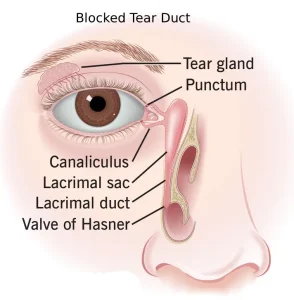
A blocked tear duct is a condition in which the normal flow of tears from the eye into the nose is partially or completely obstructed. Tears are produced to keep the eyes moist and are normally drained through small openings in the eyelids into the tear ducts. When this drainage system is blocked, tears can overflow onto the face or remain in the eye.
Blocked tear ducts can occur at any age. They are common in newborns and can also develop in adults due to infections, inflammation, injury, or age-related narrowing of the tear drainage system.
Symptoms
Symptoms of a blocked tear duct vary depending on the cause and severity. Common symptoms include:
-
Excessive tearing or watery eyes
-
Tears spilling over onto the cheeks
-
Redness of the eye
-
Swelling near the inner corner of the eye
-
Mucus or discharge from the eye
-
Crusting of the eyelids, especially after sleep
-
Blurred vision caused by excess tears
Symptoms may worsen during colds, allergies, or eye infections.
Causes
A blocked tear duct occurs when the tear drainage system becomes narrowed or obstructed, preventing normal tear flow.
Common causes include:
-
Congenital blockage present at birth
-
Eye infections or inflammation
-
Injury to the eye or nose
-
Age-related narrowing of tear ducts
-
Nasal or sinus problems
-
Tumors or growths affecting the tear drainage pathway
In infants, the blockage is often due to incomplete opening of the tear duct at birth.
Risk factors
Certain factors increase the likelihood of developing a blocked tear duct, including:
-
Being a newborn
-
Increasing age
-
Chronic eye infections or inflammation
-
Facial trauma or previous surgery near the eyes or nose
-
Nasal or sinus disorders
-
Long-term use of certain eye medications
Women are slightly more likely than men to develop tear duct blockages.
Complications
If untreated, a blocked tear duct can lead to complications such as:
-
Recurrent eye infections
-
Chronic inflammation of the tear sac
-
Pain or tenderness near the inner corner of the eye
-
Vision problems due to persistent discharge or irritation
Early treatment helps reduce the risk of complications.
Prevention
Not all cases of blocked tear ducts can be prevented, especially those present at birth. However, certain steps may help reduce risk:
-
Treating eye infections promptly
-
Maintaining good eye hygiene
-
Avoiding eye injuries
-
Managing nasal and sinus conditions
-
Attending regular eye checkups
Early evaluation and care can help maintain healthy tear drainage and prevent long-term problems.
Request an appointment
Advertisement
