
Overview
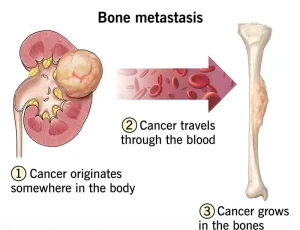
Bone metastasis occurs when cancer cells spread from their original site to the bones. It is not a primary bone cancer but a complication of advanced cancers such as breast, prostate, lung, kidney, and thyroid cancer. Cancer cells can travel through the bloodstream or lymphatic system and settle in bone tissue, disrupting normal bone structure and function.
Bone metastasis can affect any bone but most commonly involves the spine, pelvis, ribs, skull, and long bones of the arms and legs. Early detection and treatment focus on relieving symptoms, preventing complications, and improving quality of life.
Symptoms
Symptoms of bone metastasis may develop gradually or appear suddenly. Common symptoms include:
-
Persistent bone pain that may worsen at night or with movement
-
Bone tenderness or swelling
-
Weakened bones leading to fractures
-
Back pain or nerve-related symptoms if the spine is affected
-
Numbness, tingling, or weakness due to nerve compression
-
Fatigue or reduced mobility
Some people may have bone metastasis without noticeable symptoms, especially in early stages.
Causes
Bone metastasis occurs when cancer cells break away from a primary tumor and spread to the bones. Once in the bone, these cells interfere with the normal process of bone breakdown and rebuilding.
The spread is influenced by:
-
The type and aggressiveness of the original cancer
-
Blood flow patterns that allow cancer cells to reach bone tissue
-
Chemical signals that help cancer cells survive and grow within bone
The underlying cause is the original cancer rather than the bone itself.
Risk Factors
Certain factors increase the likelihood of developing bone metastasis. These include:
-
Advanced or late-stage cancer
-
Cancers that commonly spread to bone, such as breast or prostate cancer
-
Delayed diagnosis or treatment of primary cancer
-
Larger or aggressive tumors
-
Previous history of cancer spread
The risk varies depending on cancer type and individual health factors.
Complications
Bone metastasis can lead to serious and sometimes life-threatening complications. These may include:
-
Pathological fractures caused by weakened bones
-
Spinal cord compression leading to pain, paralysis, or loss of bladder control
-
High calcium levels in the blood, known as hypercalcemia
-
Chronic pain requiring long-term management
-
Reduced independence and mobility
Prompt treatment can help prevent or reduce the severity of these complications.
Prevention
There is no guaranteed way to prevent bone metastasis, but the risk can be reduced through effective cancer management. Preventive approaches include:
-
Early detection and treatment of primary cancer
-
Regular monitoring for signs of cancer spread
-
Timely reporting of new bone pain or neurological symptoms
-
Ongoing follow-up care for individuals with known cancer
Managing the primary cancer effectively is the most important step in reducing the risk and impact of bone metastasis.
Request an appointment
Advertisement
