
Overview
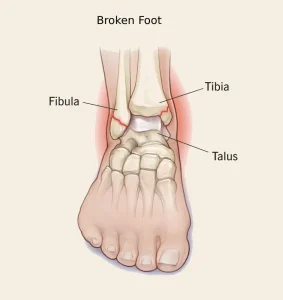
A broken foot refers to a fracture in one or more of the bones that make up the foot, including the toes, metatarsals, or hindfoot bones such as the heel bone. Foot fractures are common injuries that can result from sudden trauma or repeated stress. The severity can range from small cracks in the bone to complex fractures that affect joint alignment and mobility. Early diagnosis and proper treatment are important to support healing and prevent long-term problems with walking or balance.
Symptoms
Symptoms of a broken foot can vary based on the location and type of fracture. Common symptoms include:
-
Pain that worsens with standing or walking
-
Swelling, bruising, or tenderness in the foot
-
Difficulty bearing weight on the affected foot
-
Visible deformity or abnormal positioning of the foot or toes
-
Stiffness or reduced range of motion
Stress fractures may cause milder pain that gradually worsens over time.
Causes
A broken foot is usually caused by direct injury or excessive force. Common causes include:
-
Falls or missteps, especially on uneven surfaces
-
Dropping heavy objects on the foot
-
Sports injuries involving running, jumping, or sudden twists
-
Motor vehicle or workplace accidents
-
Repetitive stress on the foot bones over time
Risk factors
Several factors may increase the risk of a broken foot:
-
Participation in high-impact sports or physical activities
-
Wearing improper or poorly fitting footwear
-
Osteoporosis or conditions that weaken bones
-
Sudden increases in physical activity or training intensity
-
Poor balance or coordination
Complications
Most broken feet heal well with proper care, but complications can occur if the injury is severe or treatment is delayed:
-
Delayed healing or nonhealing of the fracture
-
Chronic foot pain or stiffness
-
Arthritis in joints affected by the fracture
-
Changes in foot shape or alignment
-
Difficulty walking or returning to normal activities
Prevention
While not all foot fractures can be prevented, certain steps can help reduce the risk:
-
Wearing supportive and protective footwear appropriate for activities
-
Gradually increasing activity levels and training intensity
-
Maintaining strong bones through adequate calcium and vitamin D intake
-
Using protective equipment during sports and work activities
-
Keeping living and work spaces free of tripping hazards
Prompt medical evaluation after a foot injury can help ensure proper healing and reduce the risk of long-term complications.
Advertisement
