
Overview
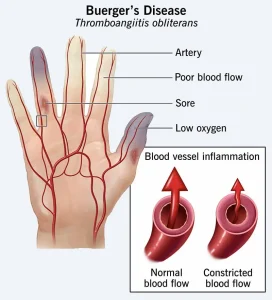
Buerger disease, also known as thromboangiitis obliterans, is a rare condition that causes inflammation and blockage of small and medium-sized blood vessels, most commonly in the hands and feet. This reduces blood flow to the affected areas, leading to pain and tissue damage. The disease is strongly linked to tobacco use and typically affects younger adults. Stopping all forms of tobacco is essential to slow disease progression.
Symptoms
Symptoms of Buerger disease develop gradually and are related to reduced blood flow to the limbs. Common symptoms include:
-
Pain or cramping in the legs or arms during activity, which improves with rest
-
Tingling or numbness in fingers or toes
-
Cold sensitivity in the hands or feet
-
Pale, reddish, or bluish skin discoloration
-
Open sores or ulcers on fingers or toes
-
Gangrene in severe cases
Symptoms often worsen with continued tobacco use.
Causes
The exact cause of Buerger disease is not fully understood, but it is closely associated with tobacco exposure. Possible causes include:
-
An abnormal immune response that triggers blood vessel inflammation
-
Damage to blood vessel lining caused by chemicals in tobacco
-
Genetic susceptibility combined with tobacco use
Cigarettes, chewing tobacco, and other nicotine products can all contribute to disease development.
Risk factors
Several factors increase the risk of developing Buerger disease:
-
Use of cigarettes, cigars, or smokeless tobacco
-
Younger age, often under 45 years
-
Male sex, though cases in women are increasing
-
Long-term or heavy tobacco use
-
Family history of vascular disease
The condition is rare in people who do not use tobacco.
Complications
Without proper management, Buerger disease can lead to serious complications:
-
Chronic pain in the affected limbs
-
Nonhealing wounds or ulcers
-
Severe infections
-
Tissue death requiring amputation of fingers, toes, or limbs
-
Reduced quality of life due to pain and disability
Early diagnosis and complete tobacco cessation reduce the risk of complications.
Prevention
The most effective way to prevent Buerger disease is to avoid all forms of tobacco. Additional preventive steps include:
-
Quitting smoking and avoiding secondhand smoke
-
Avoiding nicotine replacement products unless advised by a healthcare provider
-
Protecting hands and feet from cold and injury
-
Maintaining good skin and foot care
-
Regular medical follow-up for circulation problems
Complete tobacco cessation is the key measure to prevent disease progression and long-term complications.
Request an appointment
Advertisement
