
Overview
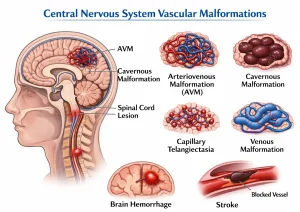
Central nervous system (CNS) vascular malformations are abnormal clusters of blood vessels in the brain or spinal cord. These malformations can disrupt normal blood flow and may lead to neurological symptoms or complications such as bleeding. CNS vascular malformations include several types, such as arteriovenous malformations (AVMs), cavernous malformations, capillary telangiectasias, and venous malformations. Some are present at birth, while others develop later in life. Early detection is important to manage symptoms and reduce the risk of serious complications.
Symptoms
Symptoms of CNS vascular malformations vary depending on the type, location, and size of the lesion. Some individuals may remain asymptomatic until a complication occurs.
Common symptoms include:
-
Headaches, sometimes severe or sudden
-
Seizures
-
Weakness or numbness in the limbs
-
Difficulty with balance or coordination
-
Vision or speech disturbances
In cases of bleeding or hemorrhage:
-
Sudden severe headache
-
Nausea and vomiting
-
Loss of consciousness
-
Neurological deficits such as paralysis or speech difficulties
Causes
CNS vascular malformations occur due to abnormal development of blood vessels. The exact cause is often unknown, though some may have a genetic component.
Major causes include:
-
Congenital defects in blood vessel formation
-
Genetic mutations affecting vascular development
-
Abnormal connections between arteries and veins without intervening capillaries (as in AVMs)
Risk Factors
Certain factors increase the likelihood of developing or being affected by CNS vascular malformations.
Key risk factors include:
-
Family history of vascular malformations
-
Genetic syndromes associated with vascular abnormalities
-
Age, as some malformations may grow or become symptomatic over time
Complications
CNS vascular malformations can lead to serious neurological complications, particularly if bleeding occurs.
Possible complications include:
-
Brain or spinal cord hemorrhage
-
Stroke
-
Permanent neurological deficits (weakness, paralysis, speech problems)
-
Seizures
-
Chronic headaches or neurological impairment
Prevention
There is no guaranteed way to prevent CNS vascular malformations, but certain measures can reduce risk of complications and improve outcomes.
Preventive and management strategies include:
-
Regular monitoring with imaging for known vascular malformations
-
Early treatment of symptomatic lesions through surgery, embolization, or radiosurgery
-
Controlling blood pressure and avoiding anticoagulants unless prescribed
-
Prompt medical attention for sudden neurological symptoms
Early diagnosis and appropriate management are key to minimizing the risk of hemorrhage and long-term neurological damage.
Advertisement
