
Overview
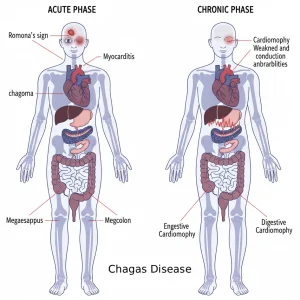
Chagas disease is a parasitic infection caused by Trypanosoma cruzi. It is primarily transmitted to humans through the bite of infected triatomine bugs, also known as kissing bugs. The disease is most common in parts of Latin America but can also be found in other regions due to travel, migration, blood transfusions, and organ transplants. Chagas disease has an acute phase and a chronic phase, and if left untreated, it can lead to serious heart and digestive complications years after initial infection.
Symptoms
Symptoms of Chagas disease vary depending on the stage of infection. Many people have mild or no symptoms in the early phase, making diagnosis challenging.
Symptoms during the acute phase may include:
-
Fever
-
Fatigue
-
Body aches
-
Headache
-
Rash
-
Loss of appetite
-
Swelling at the site of infection
-
Swelling of the eyelids on one side of the face
During the chronic phase, symptoms may not appear for years, but some individuals develop:
-
Irregular heartbeat
-
Heart enlargement
-
Heart failure
-
Difficulty swallowing
-
Abdominal pain
-
Chronic constipation
Causes
Chagas disease is caused by infection with the parasite Trypanosoma cruzi.
Major causes include:
-
Bite of an infected triatomine bug
-
Contact with bug feces entering the body through broken skin or mucous membranes
-
Transmission from mother to baby during pregnancy
-
Blood transfusions or organ transplants from infected donors
-
Consumption of food contaminated with the parasite
The parasite enters the bloodstream and can infect various tissues, particularly the heart and digestive system.
Risk Factors
Certain environmental and social factors increase the risk of acquiring Chagas disease.
Key risk factors include:
-
Living in rural or poorly constructed housing
-
Exposure to areas where triatomine bugs are common
-
Lack of access to insect control measures
-
Residence in endemic regions
-
History of blood transfusion or organ transplant in high-risk areas
Travelers and immigrants from endemic areas may also be at risk.
Complications
If untreated, Chagas disease can result in severe and potentially life-threatening complications.
Possible complications include:
-
Chronic heart disease
-
Arrhythmias
-
Heart failure
-
Sudden cardiac death
-
Enlargement of the esophagus or colon
-
Severe digestive dysfunction
Complications typically develop during the chronic phase and may appear decades after initial infection.
Prevention
Preventing Chagas disease focuses on reducing exposure to the parasite and controlling transmission.
Preventive strategies include:
-
Improving housing conditions to reduce insect infestation
-
Using insecticides and bed nets in endemic areas
-
Screening blood and organ donors
-
Practicing food safety to avoid contamination
-
Prenatal screening in high-risk populations
Early detection and treatment can reduce disease progression and lower the risk of long-term complications associated with Chagas disease.
Advertisement
