
Overview
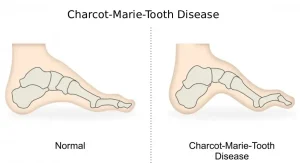
Charcot-Marie-Tooth disease (CMT) is a group of inherited neurological disorders that affect the peripheral nerves, which control muscle movement and transmit sensory information from the limbs to the brain. It is one of the most common inherited nerve disorders. CMT typically progresses slowly and leads to muscle weakness, reduced sensation, and changes in foot and hand structure. Symptoms often begin in adolescence or early adulthood but can appear at any age.
Symptoms
Symptoms of Charcot-Marie-Tooth disease vary depending on the specific type and severity of nerve involvement. They usually start in the feet and legs before affecting the hands and arms.
Common symptoms include:
-
Muscle weakness in the feet and lower legs
-
Difficulty lifting the foot while walking (foot drop)
-
Frequent tripping or ankle sprains
-
High arches or flat feet
-
Hammer toes
As the condition progresses, symptoms may include:
-
Muscle weakness and wasting in the hands
-
Reduced ability to grip or perform fine motor tasks
-
Numbness or reduced sensation in the hands and feet
-
Balance problems
-
Muscle cramps or pain
Causes
Charcot-Marie-Tooth disease is caused by genetic mutations that affect the structure or function of peripheral nerves. These mutations interfere with nerve signaling by damaging either the nerve fibers or their protective myelin sheath.
Major causes include:
-
Inherited genetic mutations passed from one or both parents
-
Defects affecting myelin production or nerve axons
-
Abnormal nerve signal transmission
Different gene mutations result in different subtypes of CMT, each with varying severity and progression.
Risk Factors
Charcot-Marie-Tooth disease is primarily influenced by genetic factors rather than lifestyle or environmental exposure.
Key risk factors include:
-
Family history of Charcot-Marie-Tooth disease
-
Inherited genetic mutations
-
Certain inherited patterns such as autosomal dominant, autosomal recessive, or X-linked inheritance
Both males and females can be affected, depending on the specific genetic type.
Complications
Although Charcot-Marie-Tooth disease is not life-threatening, it can lead to long-term physical challenges.
Possible complications include:
-
Chronic foot deformities
-
Difficulty walking or running
-
Hand weakness affecting daily activities
-
Increased risk of falls
-
Joint pain or secondary arthritis
-
Reduced quality of life due to physical limitations
In rare cases, breathing difficulties may occur if respiratory muscles are affected.
Prevention
There is no known way to prevent Charcot-Marie-Tooth disease because it is a genetic condition. However, early diagnosis and supportive care can help manage symptoms and slow functional decline.
Preventive and management strategies include:
-
Genetic counseling for individuals with a family history of CMT
-
Regular neurological evaluations
-
Physical therapy to maintain strength and mobility
-
Use of braces, orthotics, or assistive devices
-
Avoiding medications known to worsen nerve damage
Ongoing care and early intervention play a key role in preserving independence and improving quality of life for individuals with Charcot-Marie-Tooth disease.
Request an appointment
Advertisement
