
Overview
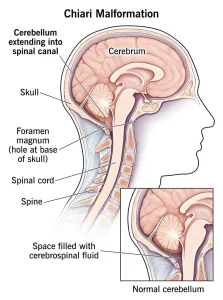
Chiari malformation is a structural condition in which brain tissue extends into the spinal canal. It occurs when part of the skull is abnormally small or misshapen, placing pressure on the brain and forcing the cerebellum downward. Chiari malformations are often present at birth but may not cause symptoms until adolescence or adulthood. The severity and symptoms vary depending on the type and extent of the malformation.
Symptoms
Symptoms of Chiari malformation can range from mild to severe and may worsen over time or with activities that increase pressure in the head, such as coughing or straining.
Common symptoms include:
-
Headaches, often at the back of the head
-
Neck pain
-
Dizziness or balance problems
-
Muscle weakness or numbness in the arms or legs
-
Tingling or burning sensations
Other possible symptoms include:
-
Difficulty swallowing
-
Hoarseness or speech problems
-
Ringing in the ears
-
Blurred or double vision
-
Poor coordination
-
Sleep apnea in some individuals
Causes
Chiari malformation is most often caused by problems with fetal development that affect the structure of the skull and brain.
Major causes include:
-
Congenital defects leading to a smaller posterior skull
-
Genetic factors affecting brain and bone development
-
Rarely, acquired causes such as injury, infection, or excessive drainage of spinal fluid
In some cases, the exact cause is unknown.
Risk Factors
Certain factors increase the likelihood of developing Chiari malformation or related complications.
Key risk factors include:
-
Family history of Chiari malformation
-
Congenital brain or spinal abnormalities
-
Conditions that affect cerebrospinal fluid flow
-
Connective tissue disorders
Many individuals with Chiari malformation may never develop symptoms.
Complications
If untreated or severe, Chiari malformation can lead to long-term neurological complications.
Possible complications include:
-
Syringomyelia, a fluid-filled cyst in the spinal cord
-
Chronic pain
-
Progressive neurological deficits
-
Impaired motor coordination
-
Hydrocephalus
-
Reduced quality of life
Early diagnosis and monitoring can help reduce the risk of serious complications.
Prevention
There is no known way to prevent congenital Chiari malformation, but early detection and management are important.
Preventive and management strategies include:
-
Regular neurological evaluation for symptomatic individuals
-
Imaging studies to monitor disease progression
-
Avoiding activities that worsen symptoms
-
Prompt medical attention for new or worsening neurological signs
-
Appropriate surgical intervention when recommended
Timely diagnosis and individualized care play a key role in managing Chiari malformation and preventing complications.
Advertisement
