
Overview
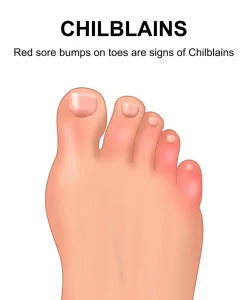
Chilblains, also known as pernio, are small, inflamed areas of skin that develop after exposure to cold, damp conditions. They occur due to an abnormal reaction of small blood vessels in the skin when exposed to cold temperatures and then rewarmed too quickly. Chilblains are not caused by freezing but can be uncomfortable and sometimes painful. They most commonly affect the fingers, toes, ears, nose, and heels.
Symptoms
Symptoms of chilblains usually appear several hours after cold exposure and may last for days or weeks.
Common symptoms include:
-
Red, bluish, or purplish skin patches
-
Swelling of the affected area
-
Itching or burning sensation
-
Tenderness or pain
In more severe cases, symptoms may include:
-
Blisters
-
Skin ulcers
-
Cracked or peeling skin
-
Increased sensitivity to touch
Causes
Chilblains occur due to an abnormal response of blood vessels to cold exposure. When cold skin is rapidly rewarmed, small blood vessels may expand too quickly, leading to leakage of blood into surrounding tissues.
Major causes include:
-
Exposure to cold and damp environments
-
Rapid warming of cold skin
-
Poor circulation
-
Low body weight or inadequate insulation against cold
Chilblains are more common in cold climates and during winter months.
Risk Factors
Certain individuals are more likely to develop chilblains.
Key risk factors include:
-
Prolonged exposure to cold weather
-
Poor circulation or vascular conditions
-
Smoking
-
Low body mass index
-
Wearing tight or inadequate clothing in cold conditions
-
Underlying connective tissue or autoimmune disorders
Children, older adults, and women are more commonly affected.
Complications
Chilblains usually resolve without long-term damage, but complications can occur if the skin is repeatedly affected or becomes infected.
Potential complications include:
-
Skin infection from scratching or open sores
-
Chronic chilblains with repeated cold exposure
-
Ulceration in severe or untreated cases
-
Scarring in rare cases
Prompt care reduces the risk of complications.
Prevention
Preventing chilblains focuses on protecting the skin from cold exposure and improving circulation.
Preventive strategies include:
-
Keeping hands, feet, and other exposed areas warm and dry
-
Wearing loose, layered clothing and insulated footwear
-
Avoiding sudden warming of cold skin
-
Staying physically active to improve circulation
-
Avoiding smoking, which reduces blood flow
-
Maintaining adequate nutrition and body warmth
Proper cold protection and gradual rewarming help reduce the likelihood of developing chilblains and prevent recurrence.
Advertisement
