
Overview
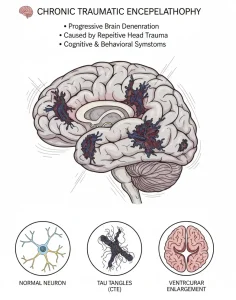
Chronic Traumatic Encephalopathy (CTE) is a progressive degenerative brain condition associated with repeated head injuries or long-term exposure to brain trauma. It has been most commonly identified in individuals who participate in contact sports, military service, or activities with repeated concussive or subconcussive impacts.
CTE develops over years or decades after repeated brain injuries and leads to gradual deterioration of brain function. The condition affects thinking, behavior, mood, and movement. At present, CTE can only be definitively diagnosed after death through examination of brain tissue.
Symptoms
Symptoms of Chronic Traumatic Encephalopathy usually appear years after repeated head trauma and tend to worsen over time.
Common symptoms include:
-
Memory loss and difficulty concentrating
-
Problems with planning, judgment, and decision-making
-
Confusion or disorientation
-
Mood changes such as depression, anxiety, or irritability
-
Impulsive or aggressive behavior
-
Personality changes
-
Headaches
-
Sleep disturbances
-
Balance and coordination problems
-
In later stages, symptoms similar to dementia or Parkinson’s disease
Symptoms may progress through stages, starting with mild cognitive or mood changes and advancing to severe neurological impairment.
Causes
Chronic Traumatic Encephalopathy is caused by repeated blows to the head or repeated acceleration and deceleration of the brain, even when concussions are not diagnosed.
Contributing causes include:
-
Repeated concussions
-
Repetitive subconcussive impacts
-
Inadequate recovery time between head injuries
-
Long-term exposure to contact sports
-
Traumatic brain injuries sustained during military service
These injuries lead to abnormal protein buildup in the brain, resulting in progressive brain damage.
Risk Factors
Certain factors increase the risk of developing Chronic Traumatic Encephalopathy.
These include:
-
Participation in contact or collision sports
-
Long careers in sports involving repeated head impacts
-
History of multiple concussions
-
Military combat exposure
-
Early age at first exposure to repetitive head trauma
-
Lack of proper protective measures
Not everyone with repeated head injuries develops CTE, indicating that genetic and environmental factors may also play a role.
Complications
As Chronic Traumatic Encephalopathy progresses, it can lead to serious long-term complications affecting both mental and physical health.
Possible complications include:
-
Progressive cognitive decline
-
Severe behavioral and emotional disturbances
-
Increased risk of substance misuse
-
Difficulty maintaining employment or relationships
-
Development of dementia
-
Increased risk of self-harm or suicidal thoughts
These complications can significantly reduce quality of life.
Prevention
There is no cure for Chronic Traumatic Encephalopathy, making prevention the most important strategy.
Preventive measures include:
-
Reducing exposure to repetitive head impacts
-
Using proper protective equipment during sports and activities
-
Following concussion protocols and allowing full recovery before returning to play
-
Educating athletes, coaches, and families about brain injury risks
-
Enforcing safety rules in sports
-
Seeking medical evaluation after any head injury
Early recognition of head injuries and long-term efforts to reduce repeated brain trauma are key to lowering the risk of Chronic Traumatic Encephalopathy.
Request an appointment
Advertisement
