
Overview
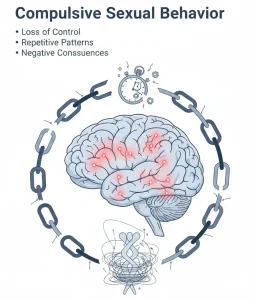
Compulsive sexual behavior, sometimes referred to as hypersexual disorder or sexual addiction, is a condition characterized by persistent and intense sexual urges, thoughts, or behaviors that feel difficult or impossible to control. These behaviors continue despite causing emotional distress, relationship problems, or negative consequences in daily life. The condition can affect individuals of any gender and may interfere with personal, social, and occupational functioning.
Symptoms
Symptoms of compulsive sexual behavior vary in intensity and presentation but commonly include:
-
Recurrent and intense sexual thoughts or fantasies that dominate daily life
-
Repeated engagement in sexual behaviors despite negative consequences
-
Difficulty controlling or reducing sexual urges or actions
-
Using sexual behavior as a way to cope with stress, anxiety, loneliness, or depression
-
Feelings of guilt, shame, or distress after sexual activity
-
Neglect of responsibilities, relationships, or work due to sexual behavior
-
Failed attempts to stop or limit sexual activities
Causes
The exact cause of compulsive sexual behavior is not fully understood. It is thought to result from a combination of psychological, biological, and social factors. Changes in brain pathways related to reward, impulse control, and motivation may contribute. Underlying mental health conditions, trauma, chronic stress, and repeated exposure to highly stimulating sexual content may also play a role.
Risk Factors
Several factors may increase the likelihood of developing compulsive sexual behavior, including:
-
History of mental health disorders such as depression, anxiety, or bipolar disorder
-
Substance use disorders or other behavioral addictions
-
High levels of stress or emotional distress
-
Past trauma or adverse childhood experiences
-
Impulsivity or difficulty with emotional regulation
-
Easy access to sexual content or opportunities
Complications
If left unaddressed, compulsive sexual behavior can lead to significant complications:
-
Relationship conflicts, trust issues, or separation
-
Emotional distress, shame, or low self-esteem
-
Increased risk of sexually transmitted infections
-
Financial or legal problems related to sexual activities
-
Co-occurring mental health disorders such as depression or anxiety
-
Impaired work or academic performance
Prevention
While compulsive sexual behavior cannot always be prevented, certain strategies may reduce risk and support healthier coping:
-
Developing healthy stress management and emotional regulation skills
-
Seeking early mental health support for persistent distress or impulsive behaviors
-
Limiting exposure to triggering environments or content
-
Building strong social support networks
-
Promoting open discussions about sexual health and mental well-being
Advertisement
